One is Equal to One
Solo exhibition at Marabouparken, Stockholm
2025.10.25–2026.02.08
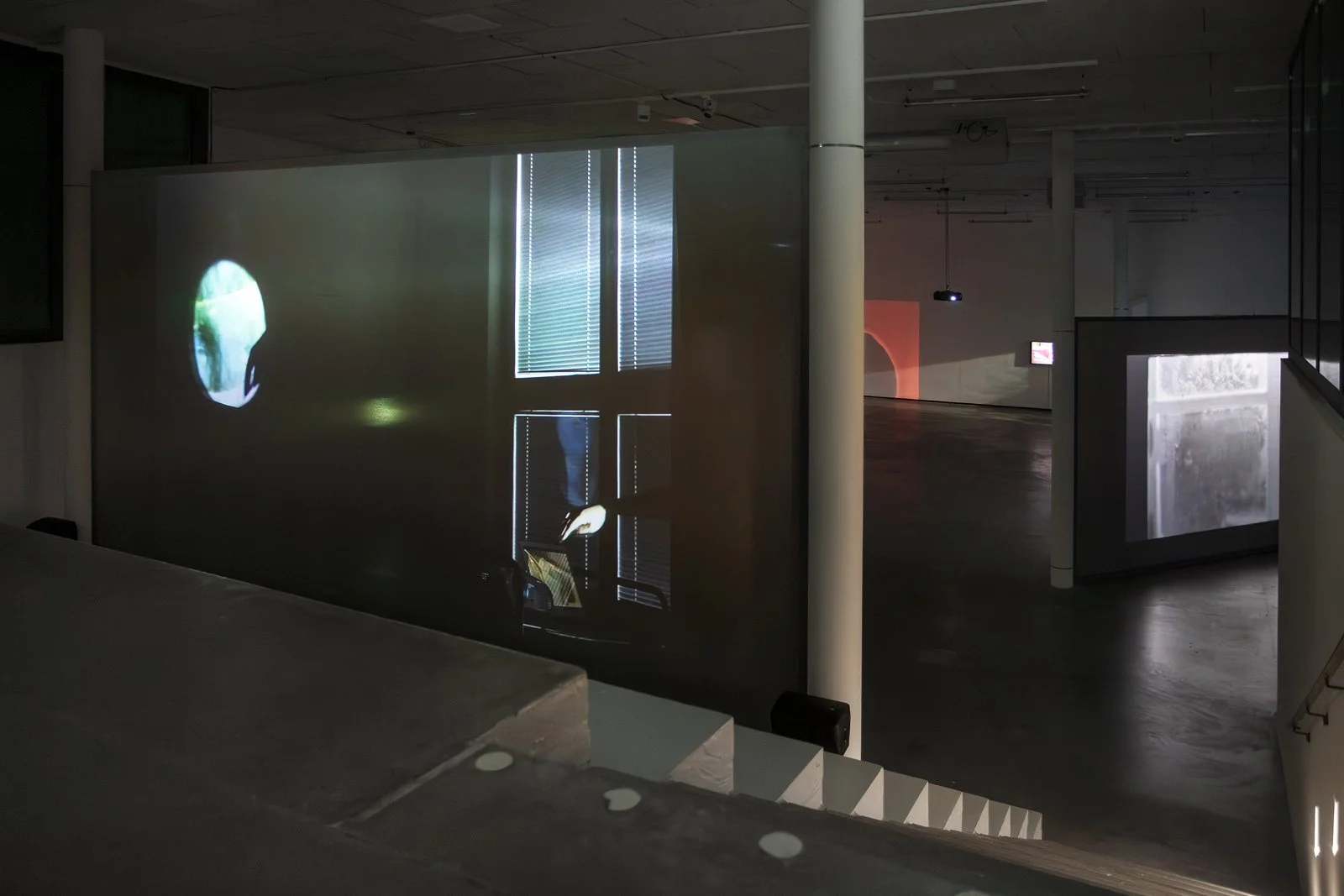
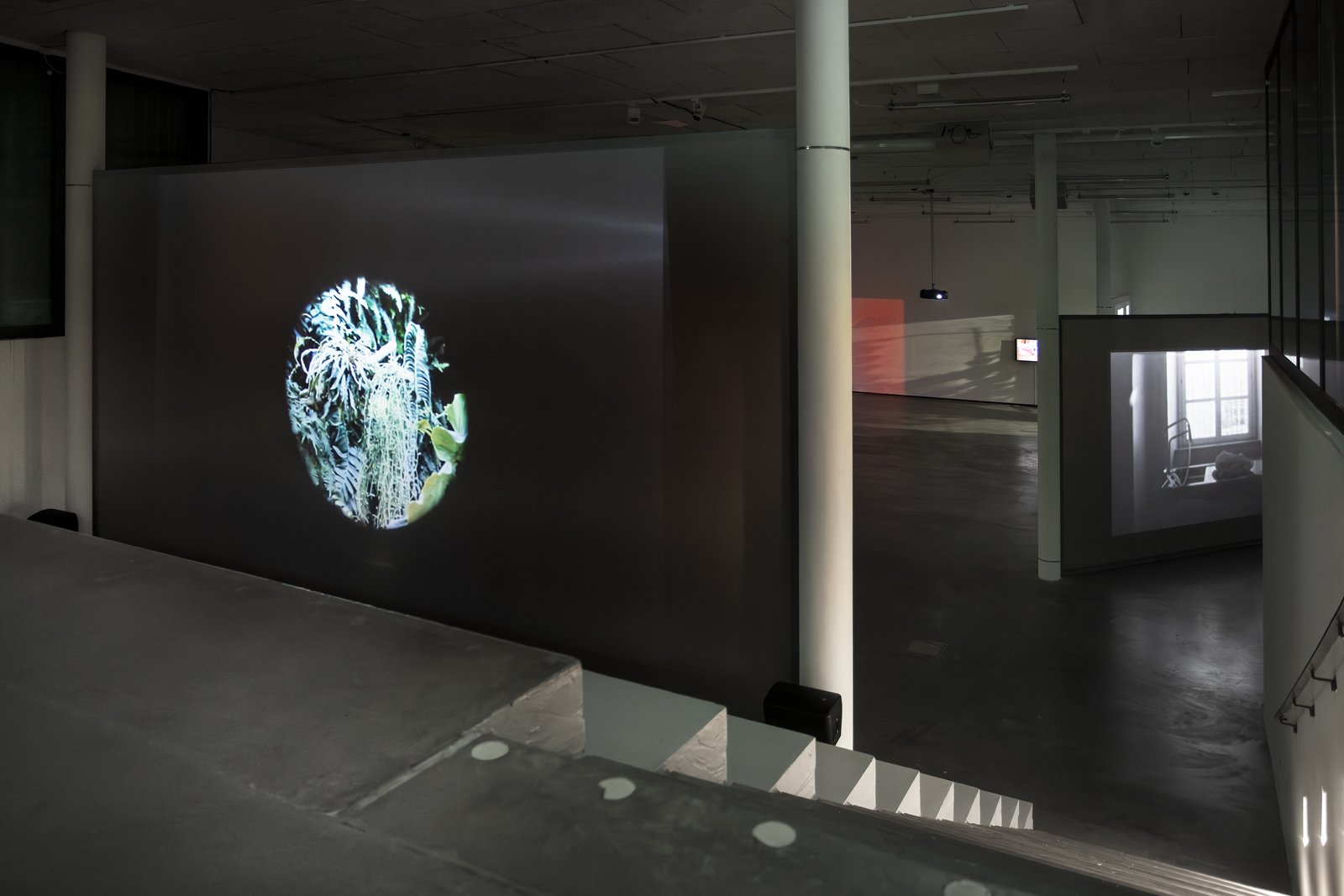
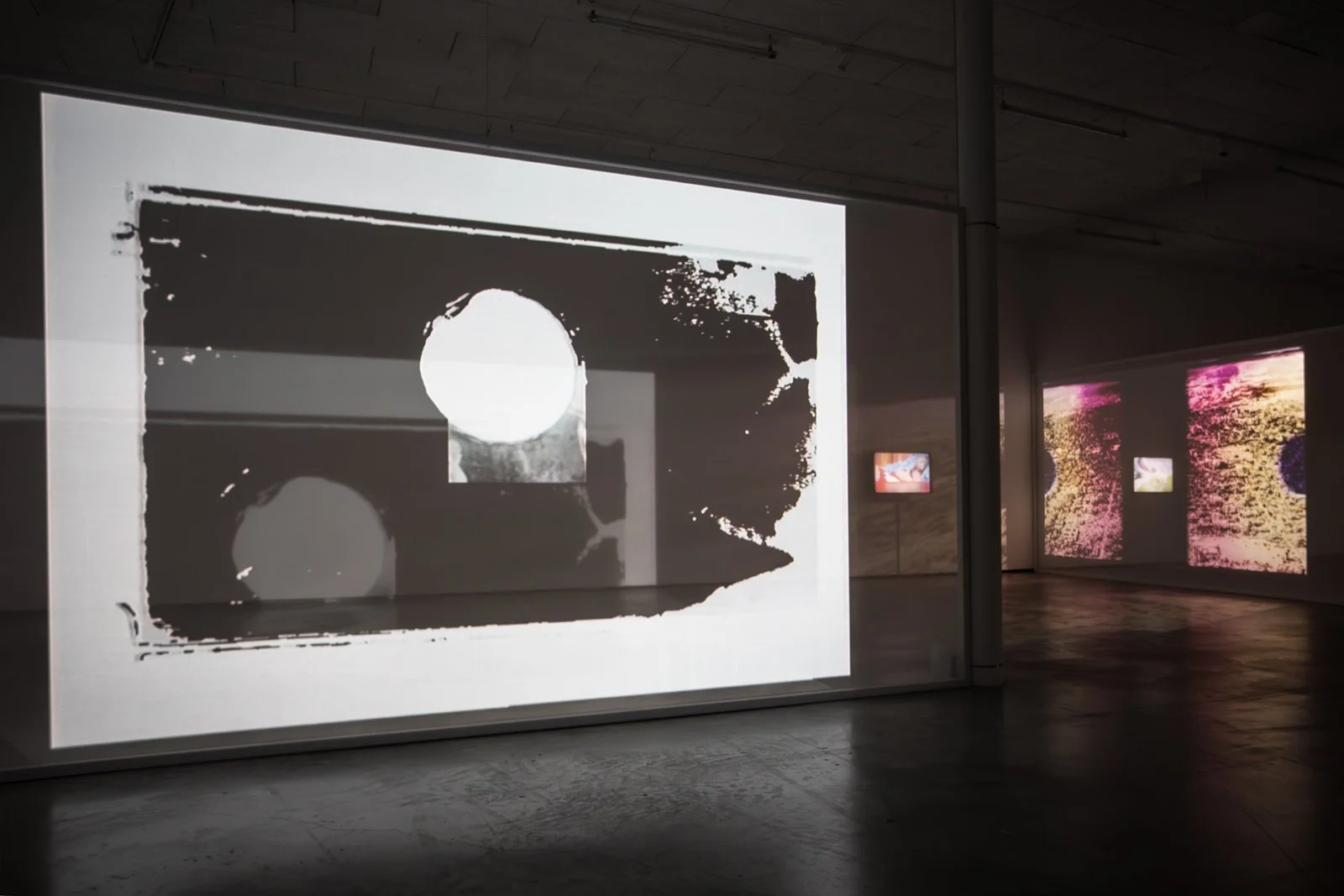
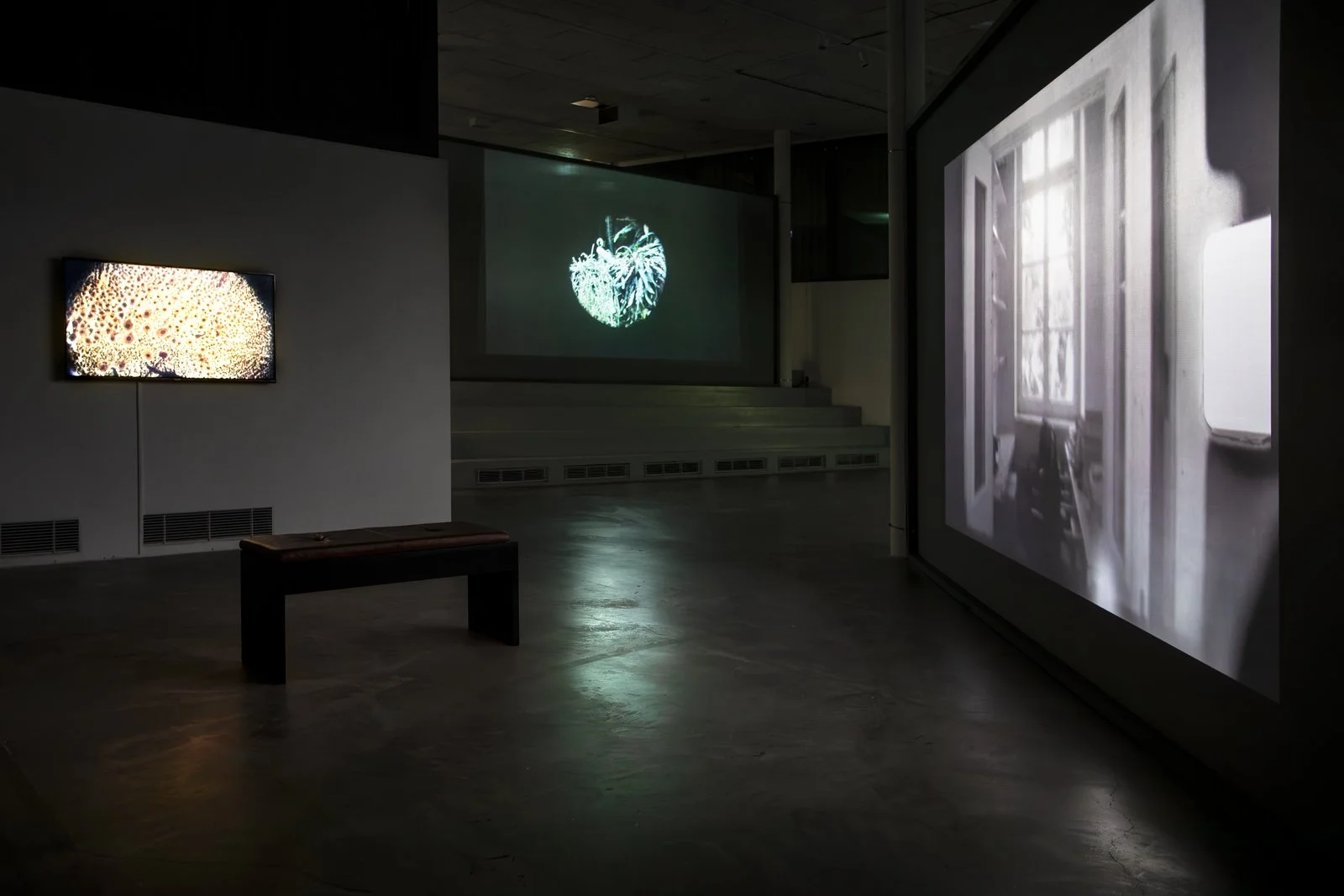
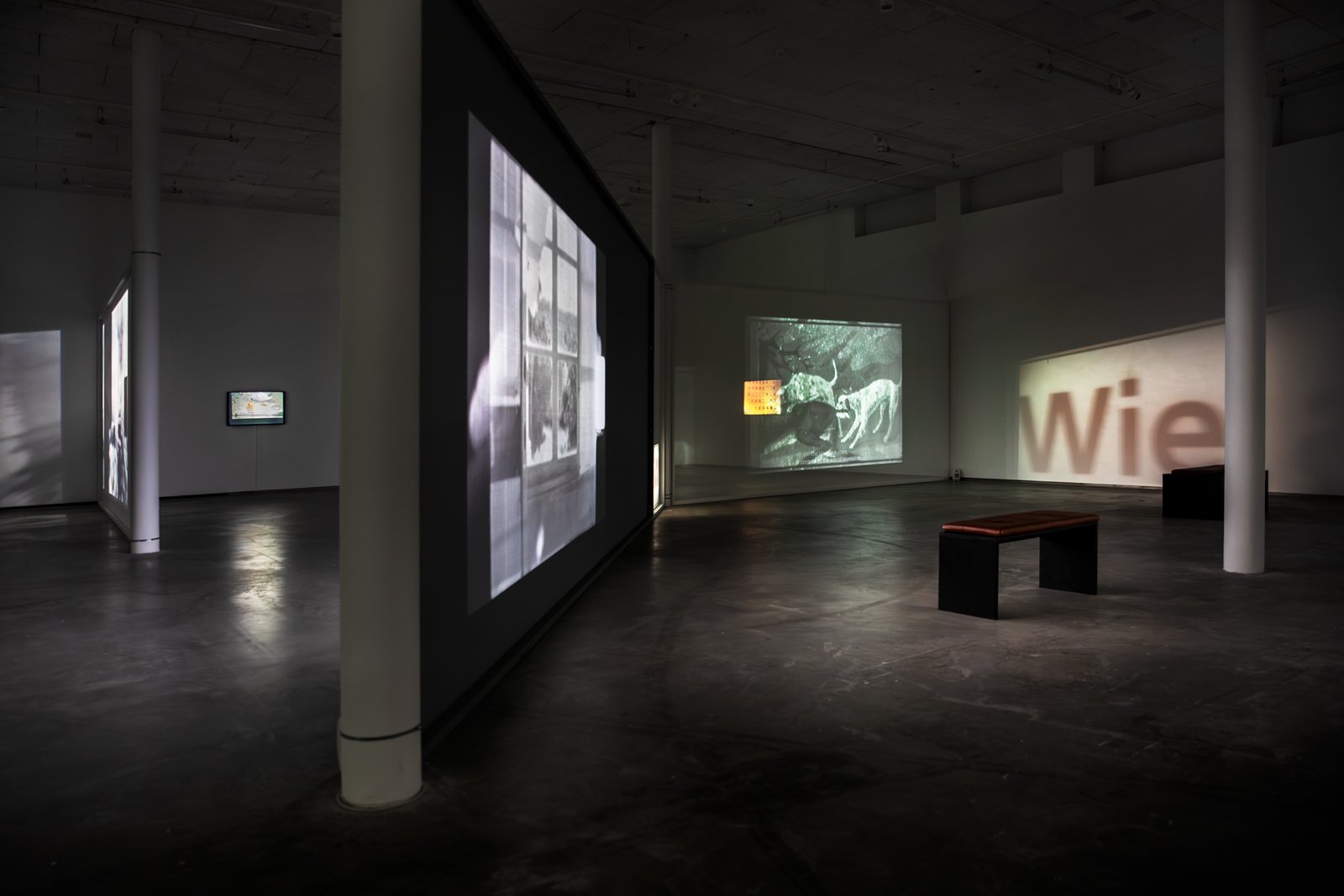
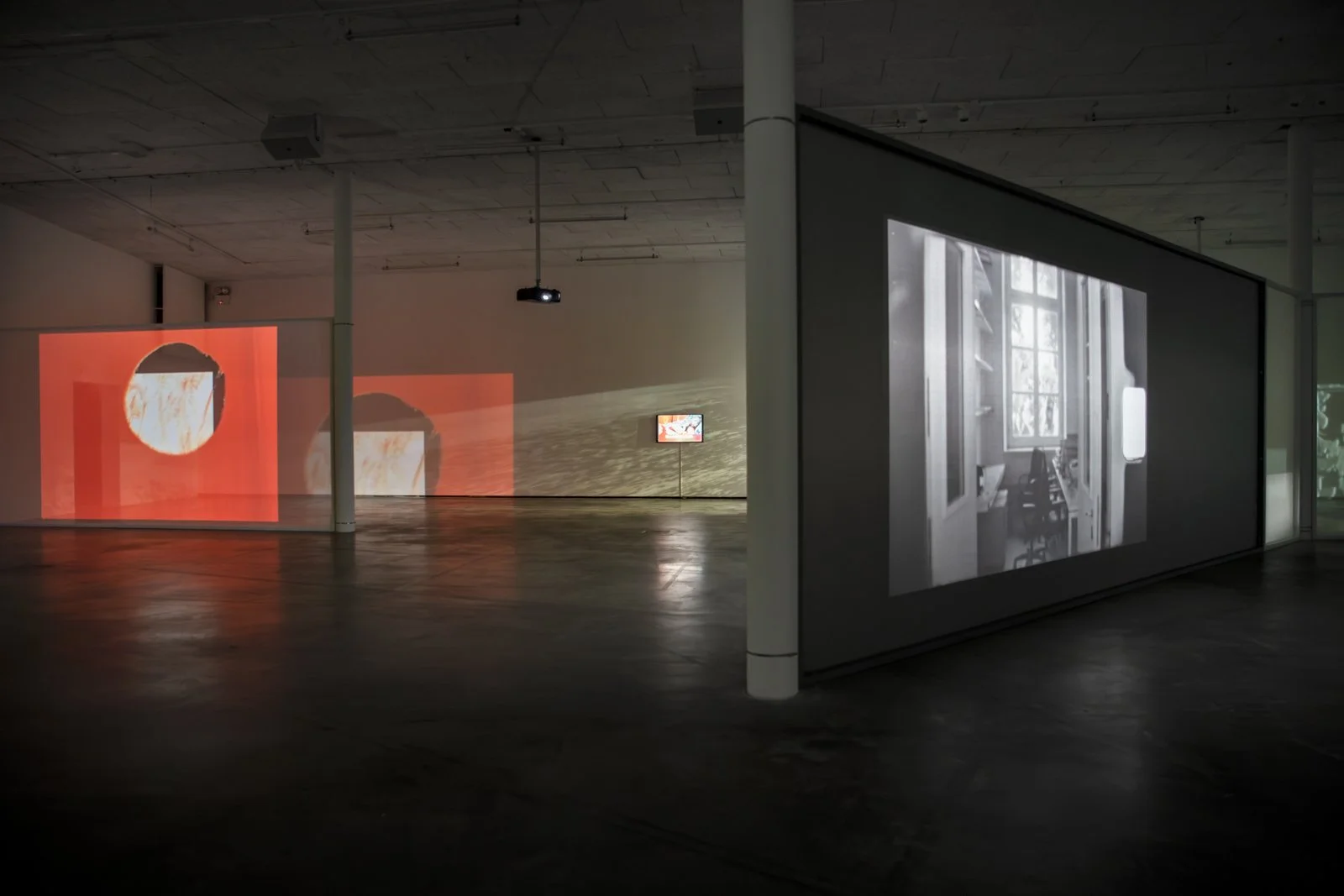
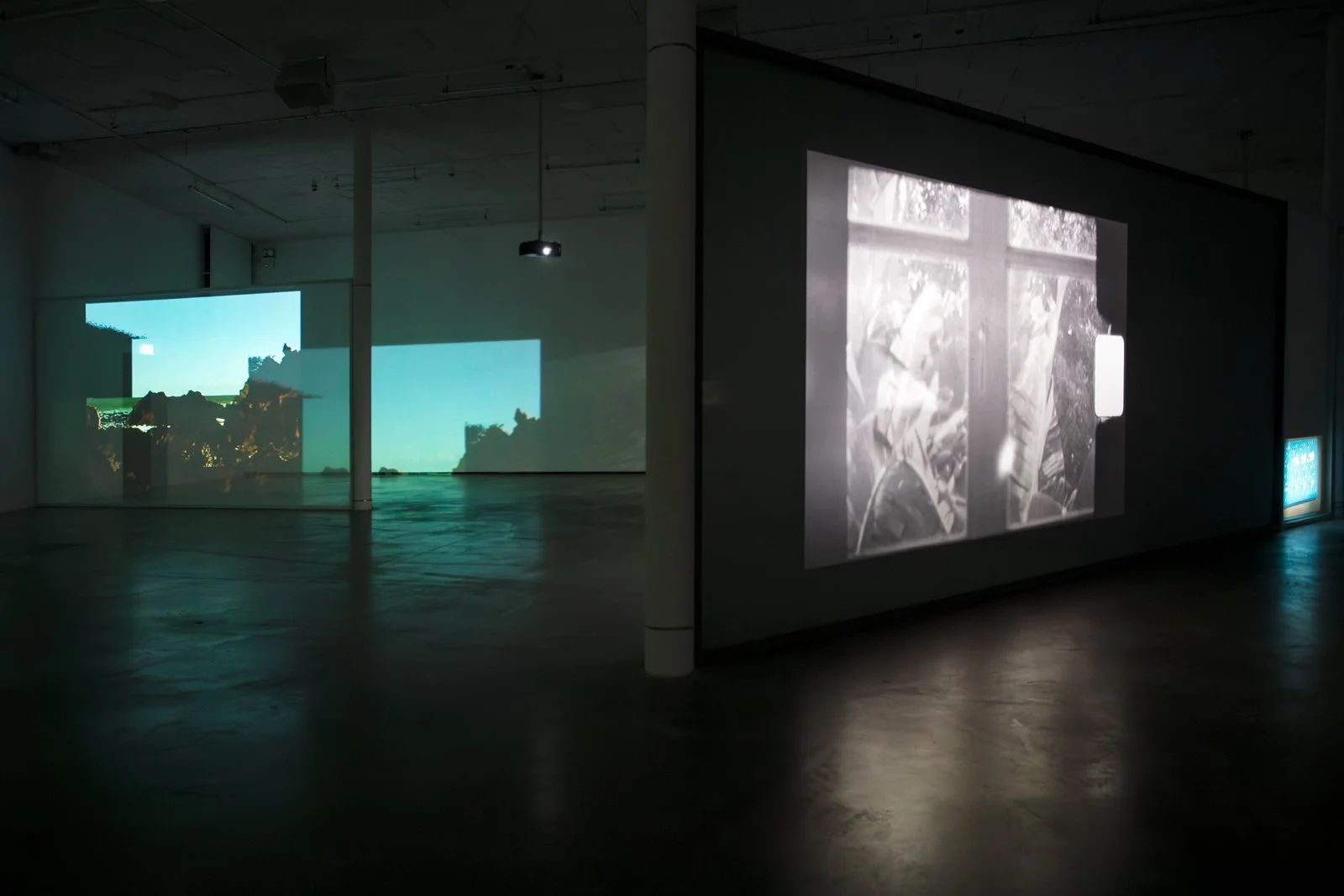
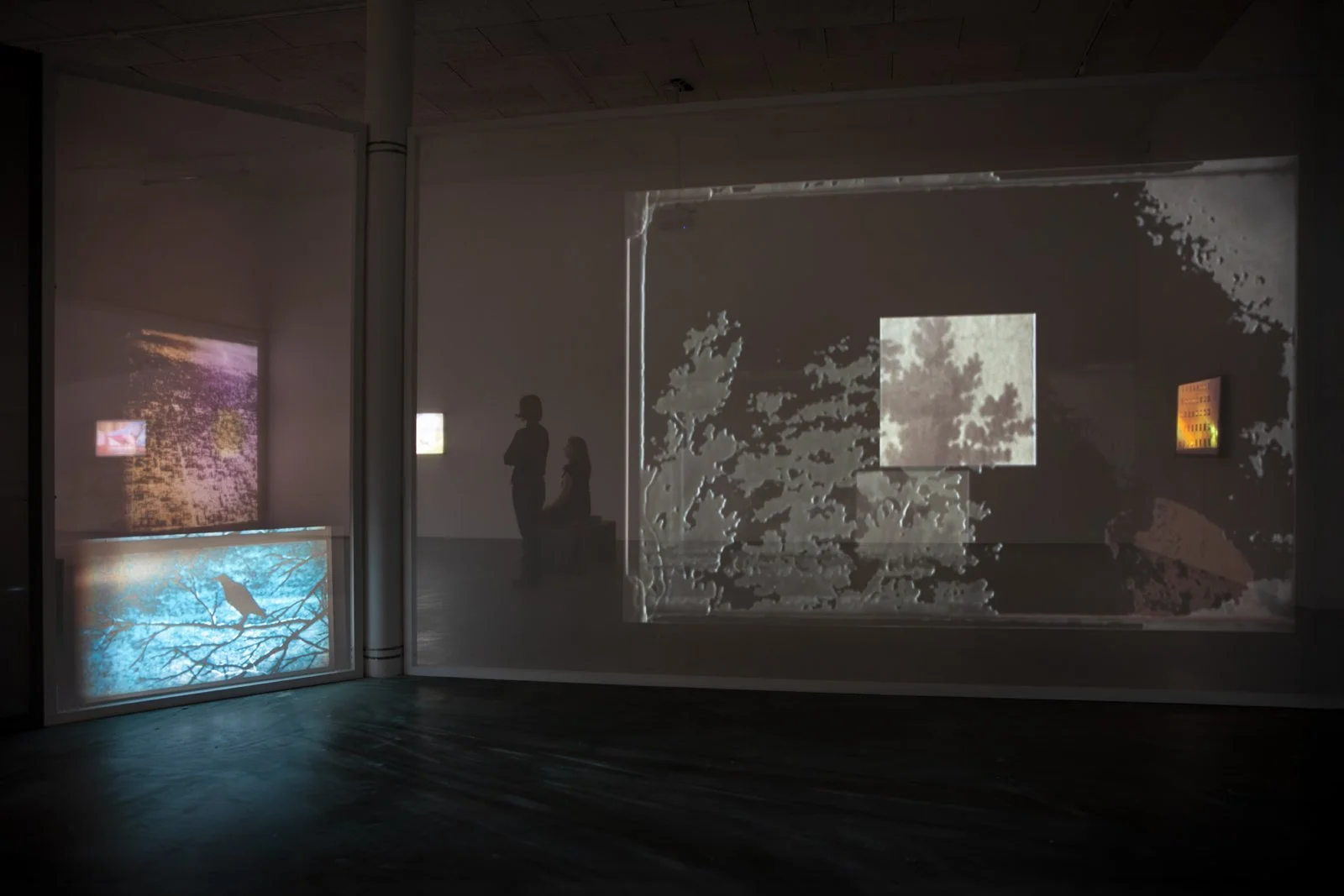
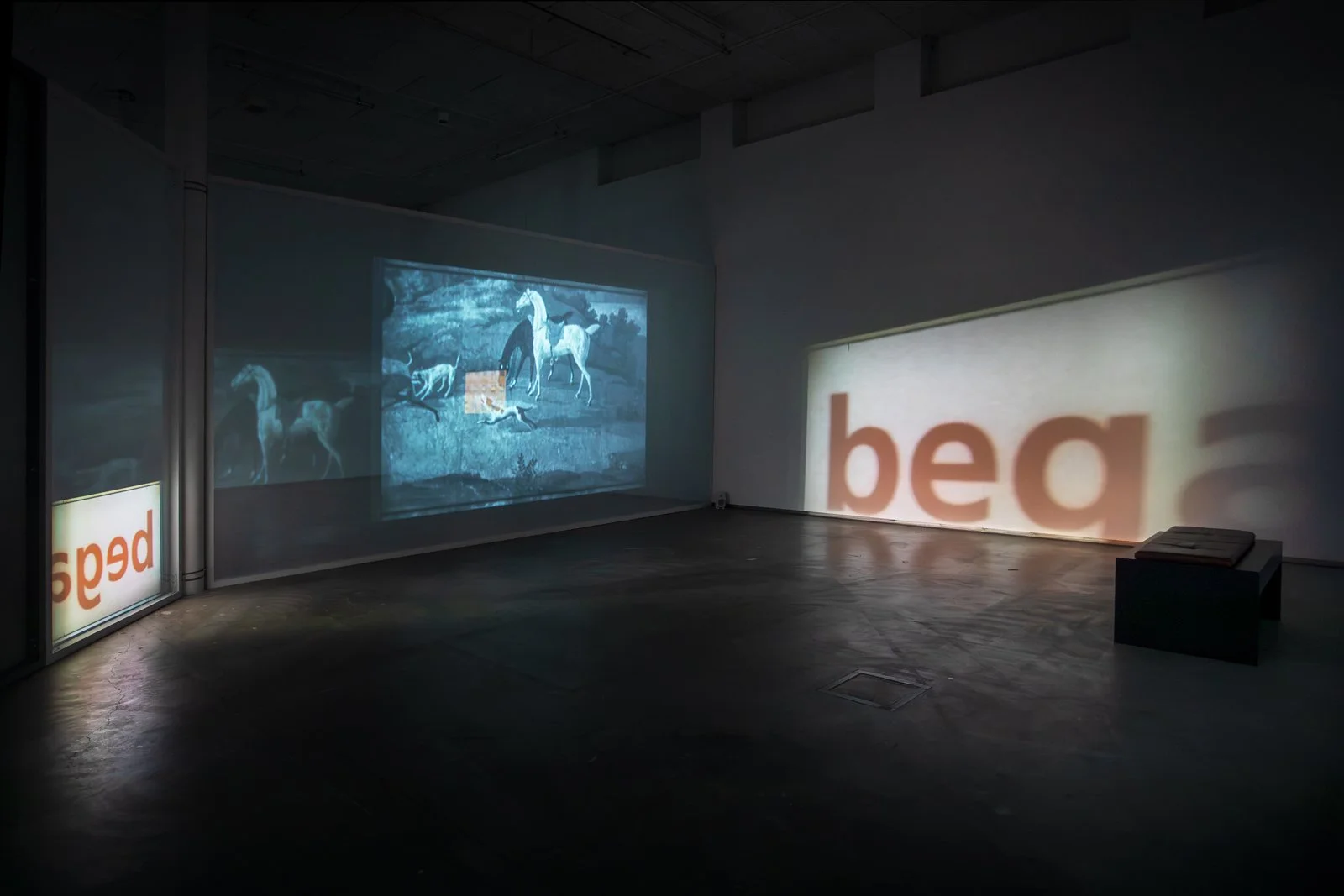
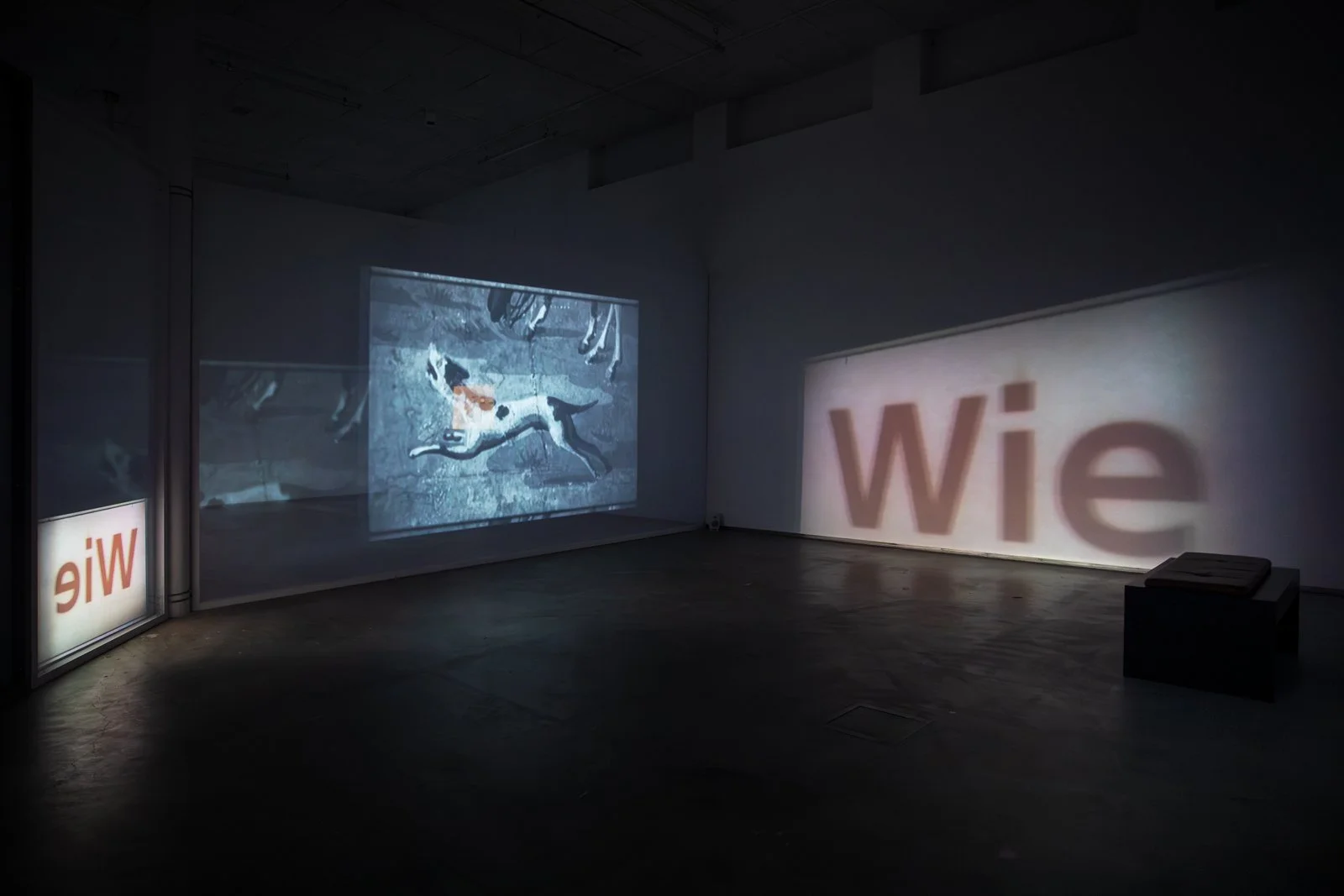
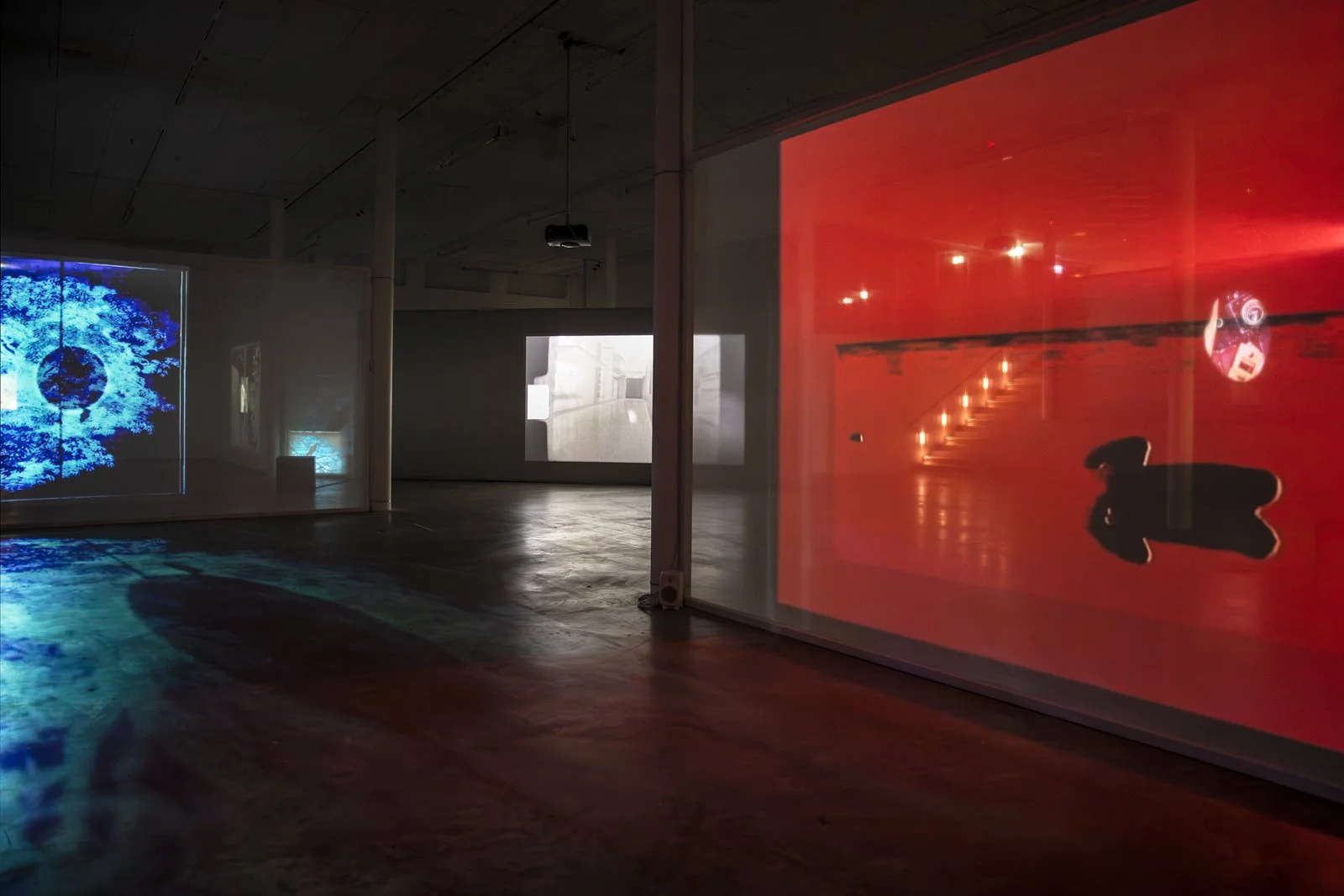
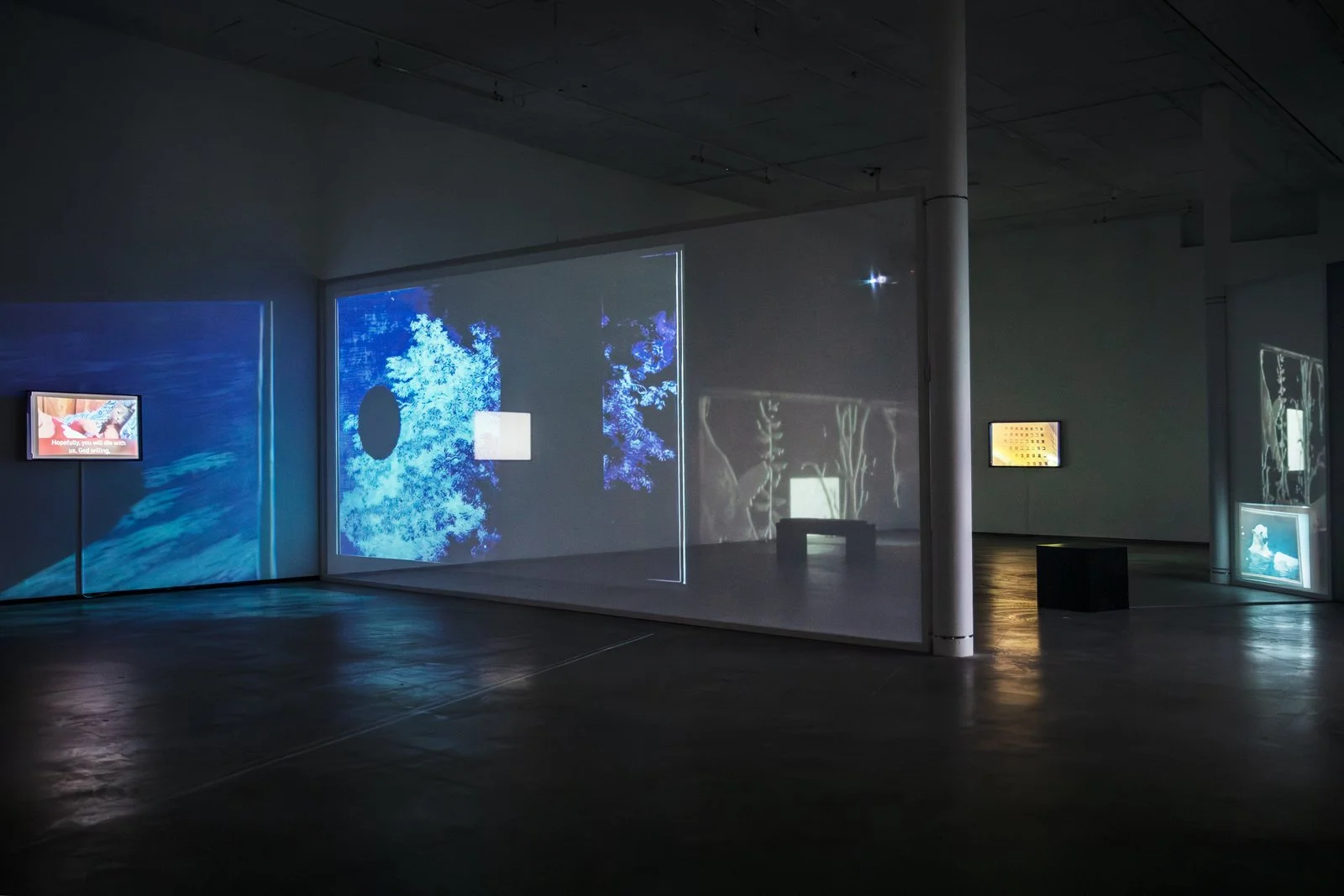
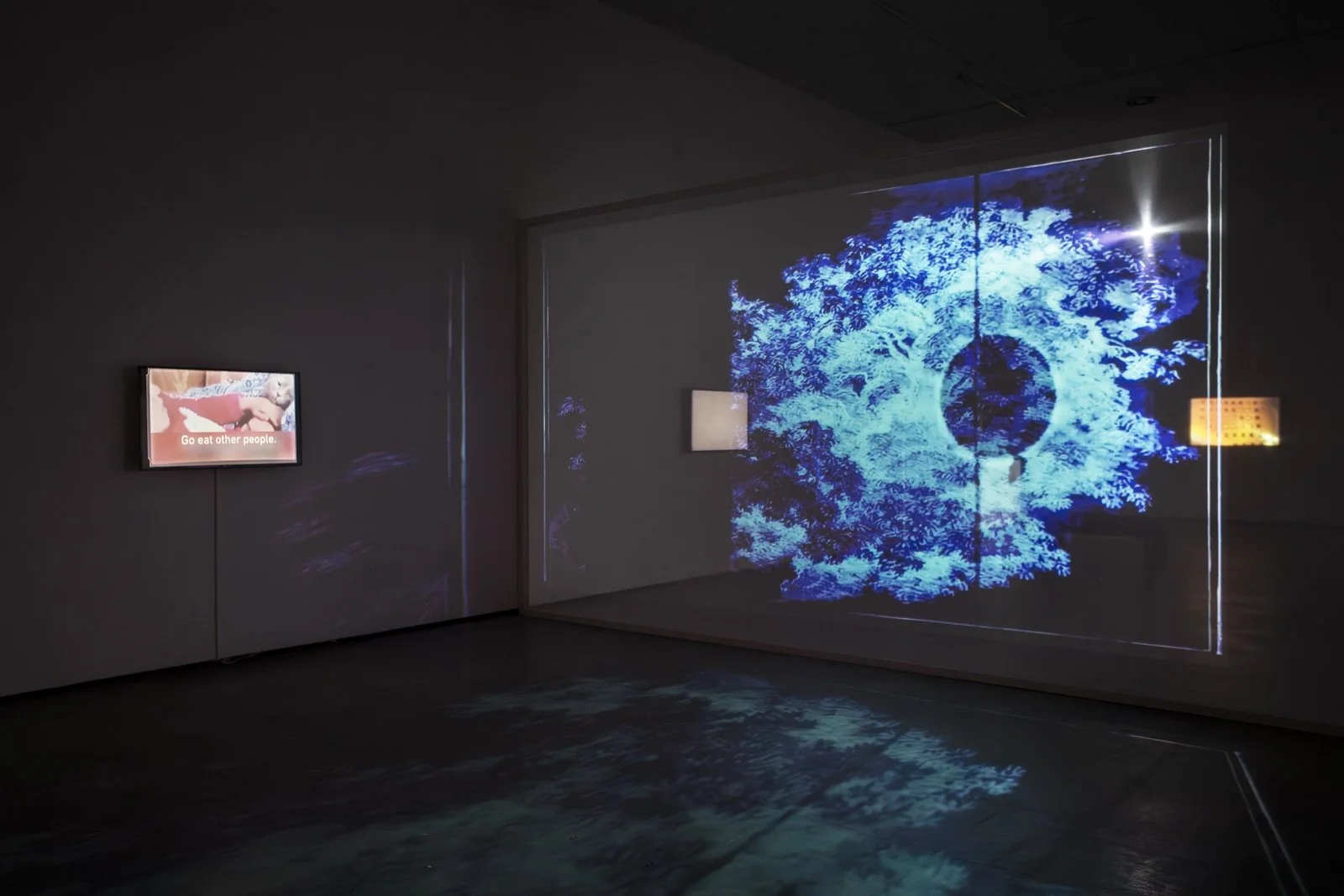
The main hall of Marabouparken Konsthall is accessed from above. Before going down the stairs, you usually get a first overview of the exhibition, but in One Is Equal to One a film screen disrupts the view. A circle, or an eye, makes its way across a projected image: we see plants, a bird. The artist’s studio is briefly visible, as is her hand.
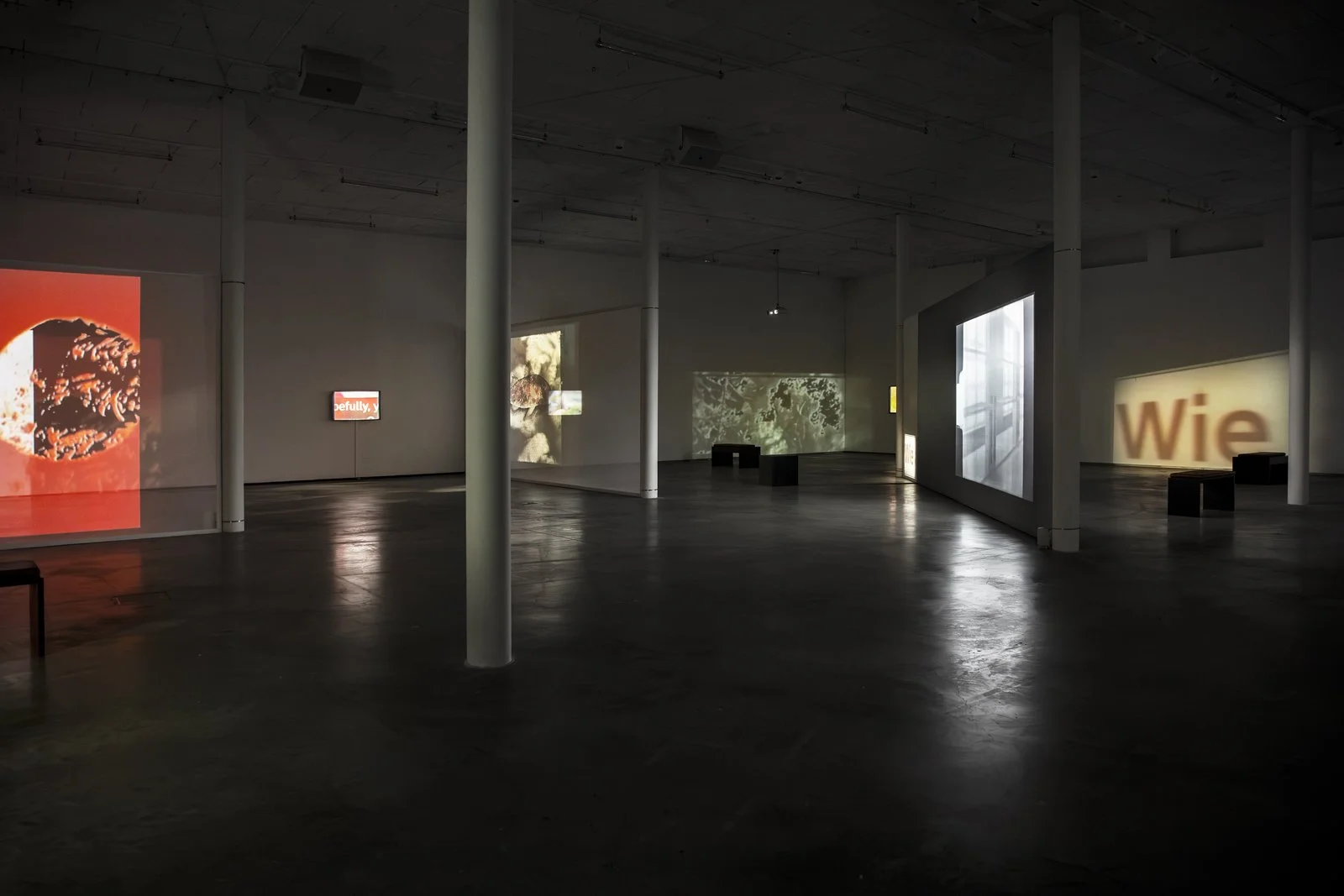
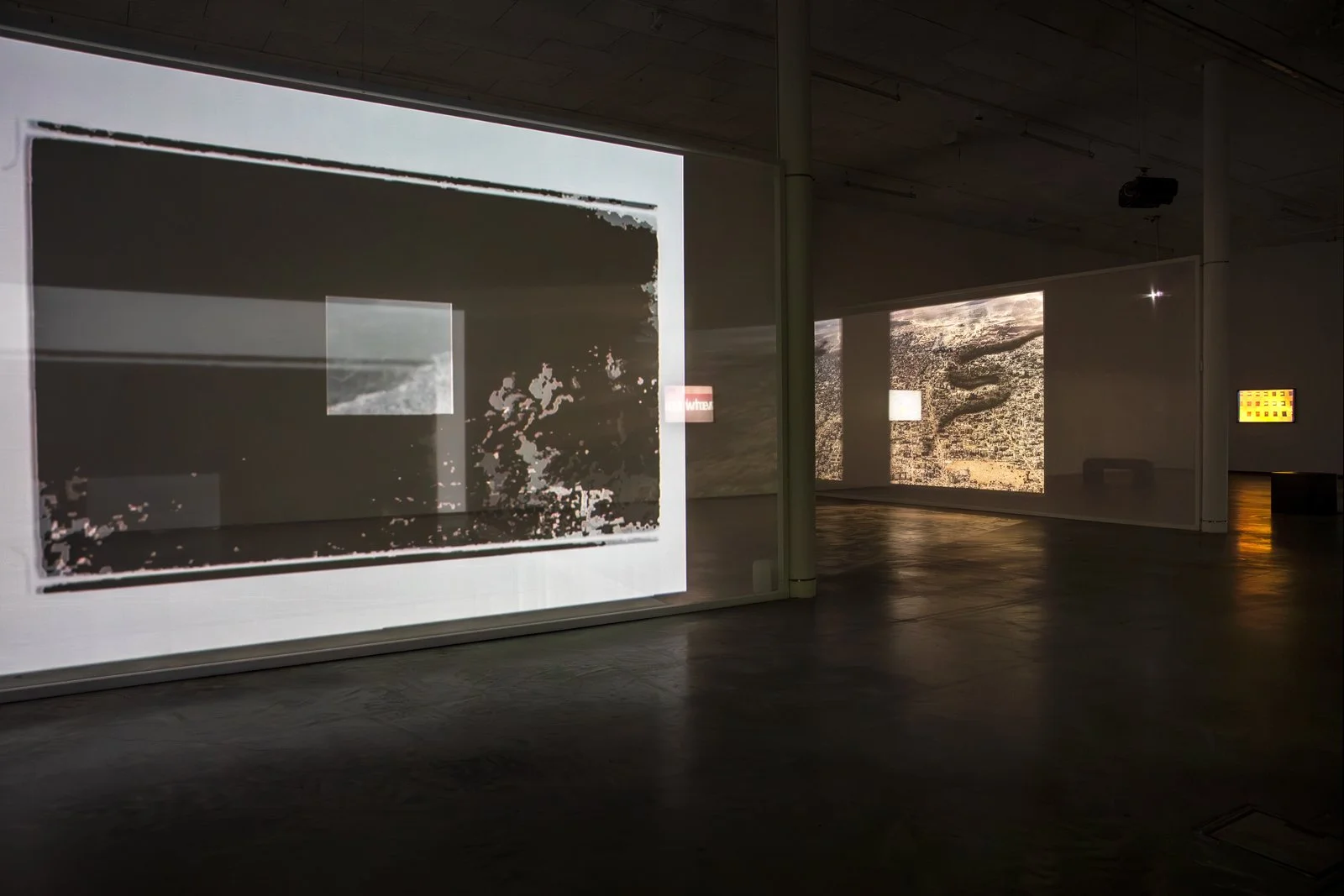
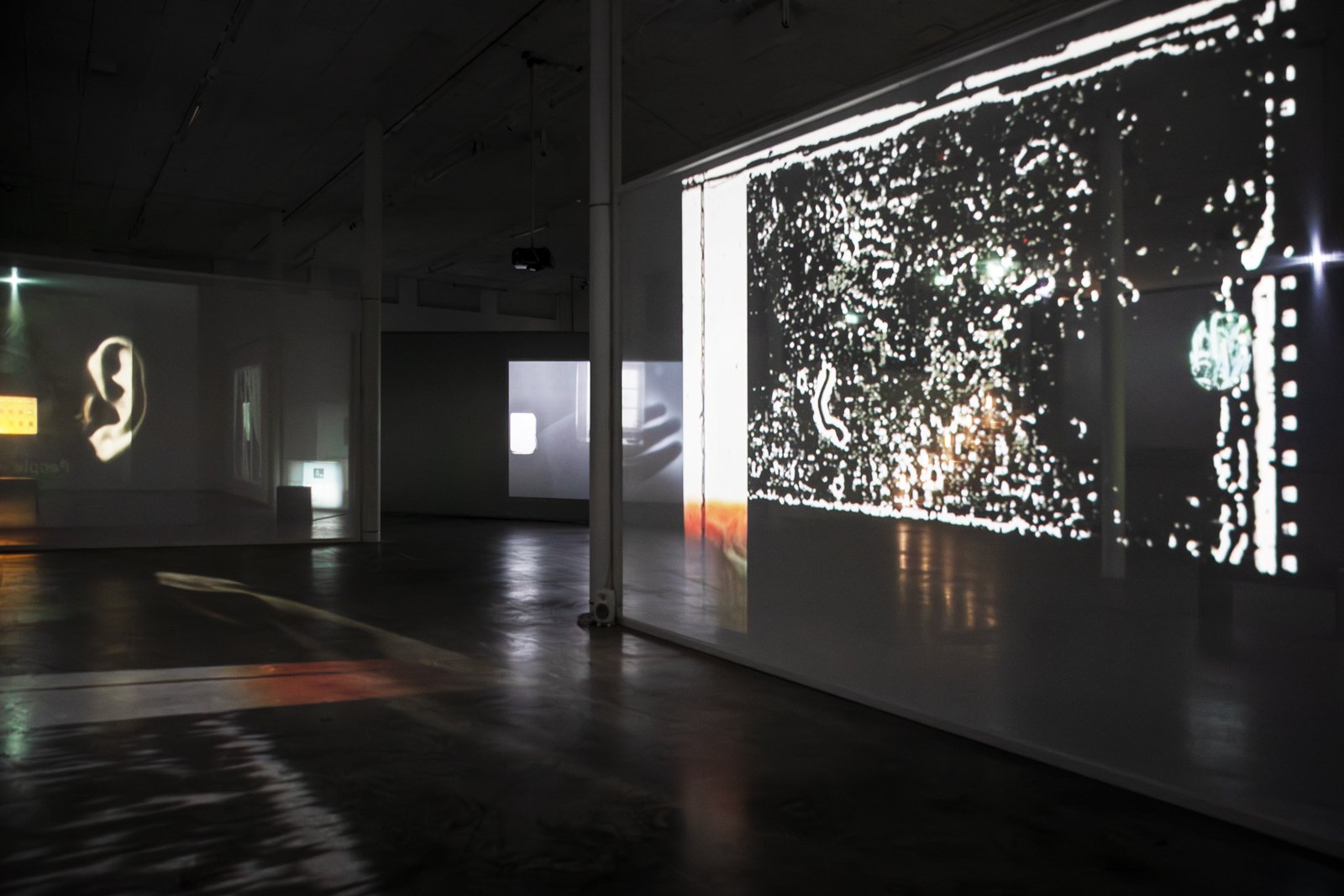
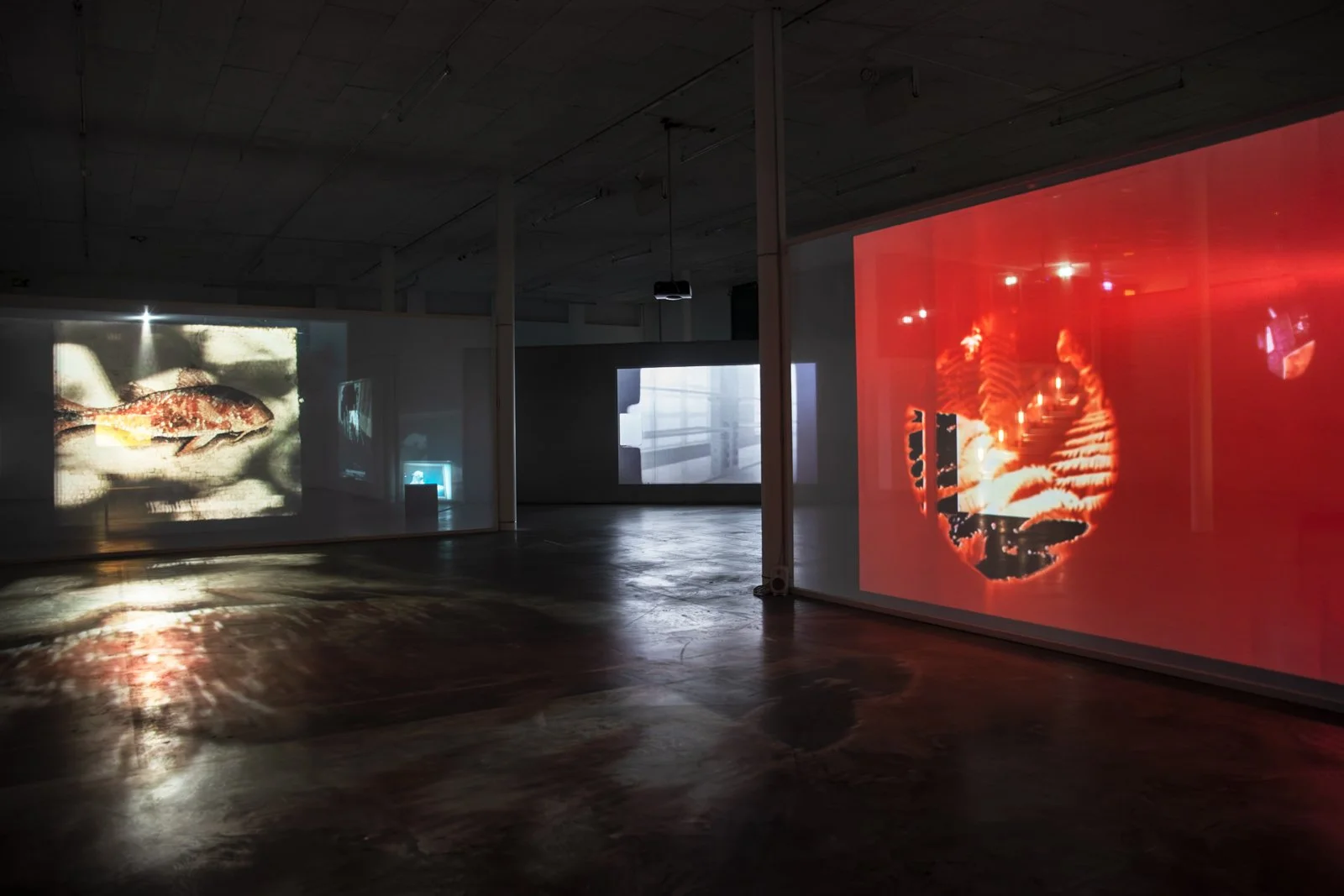
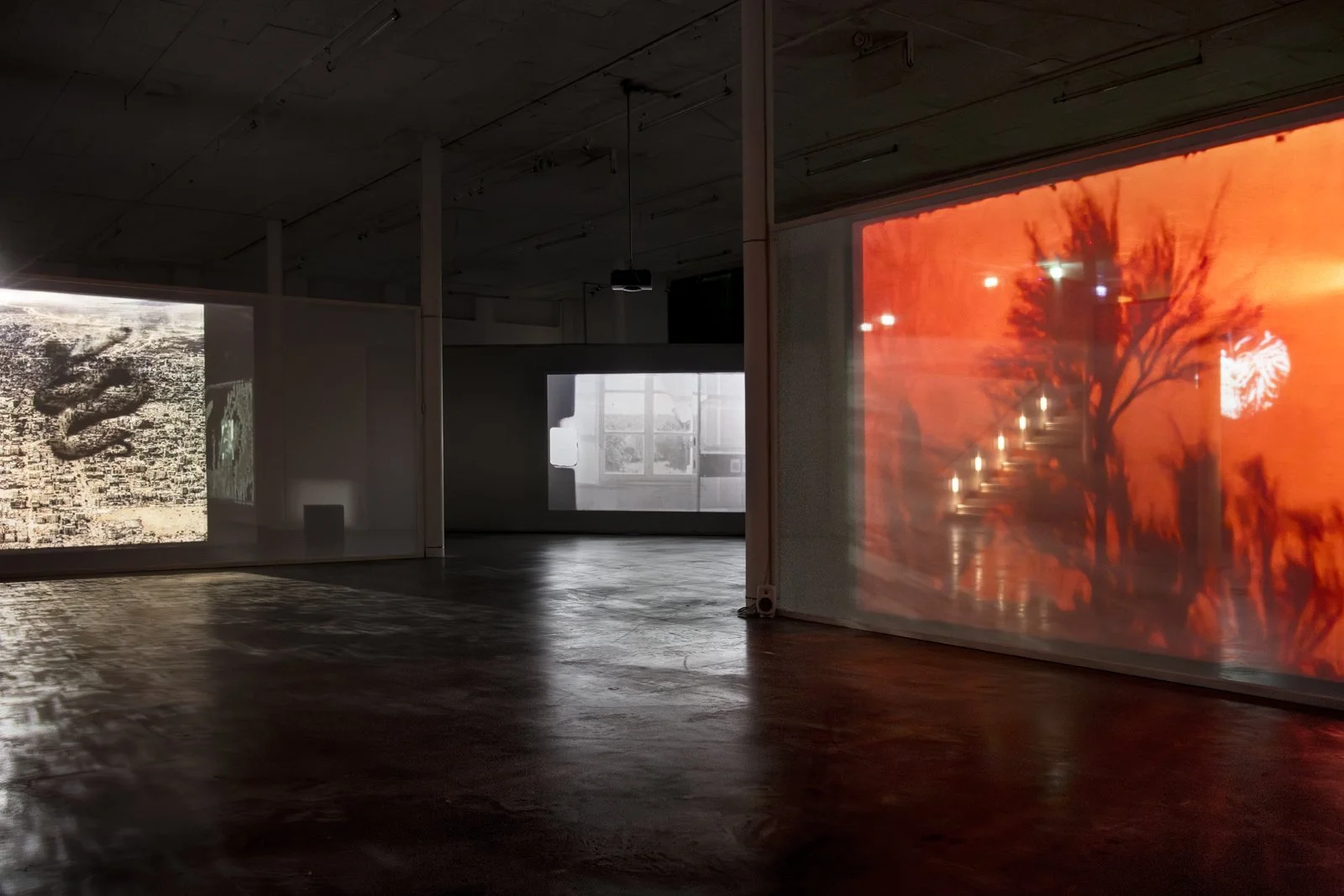
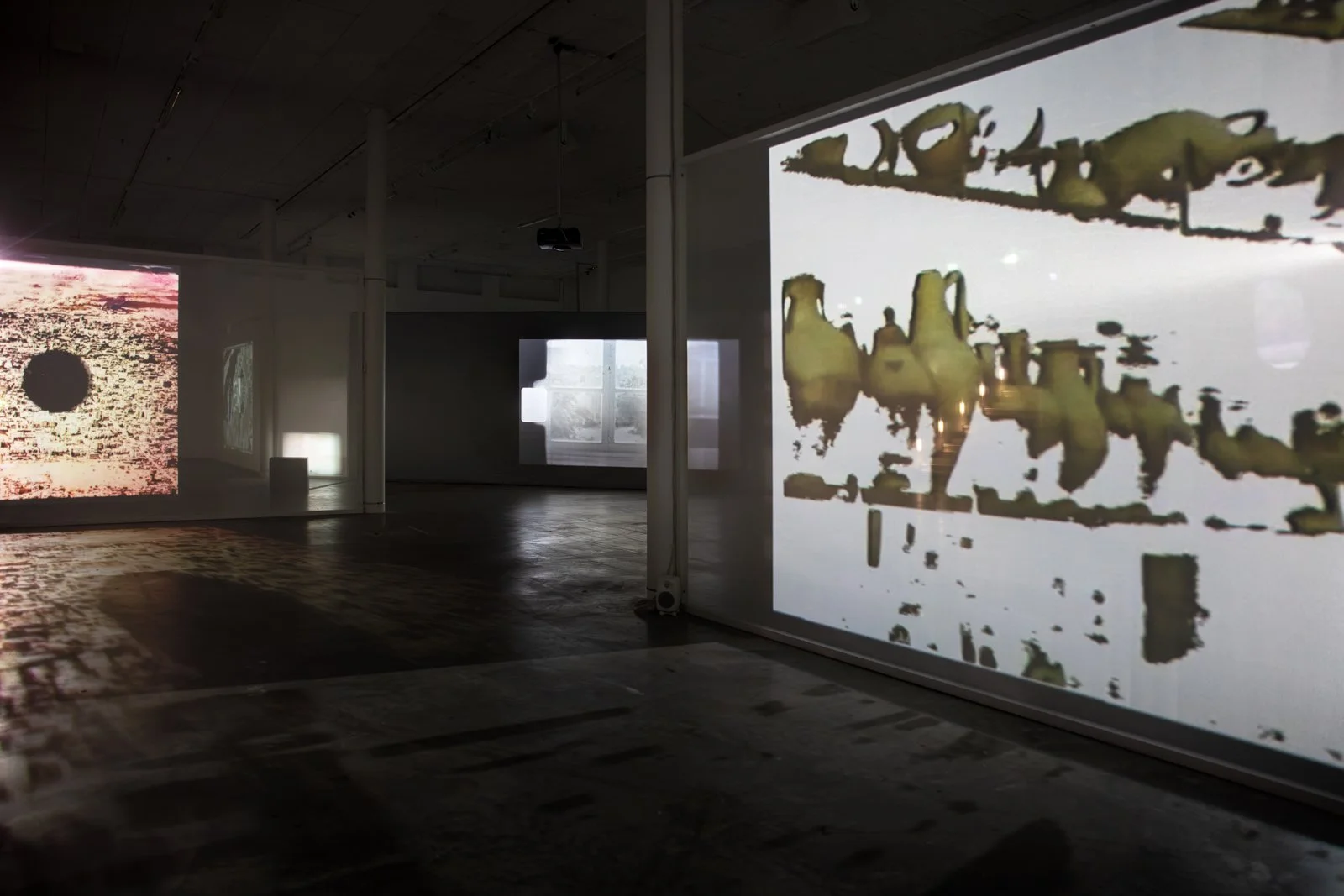
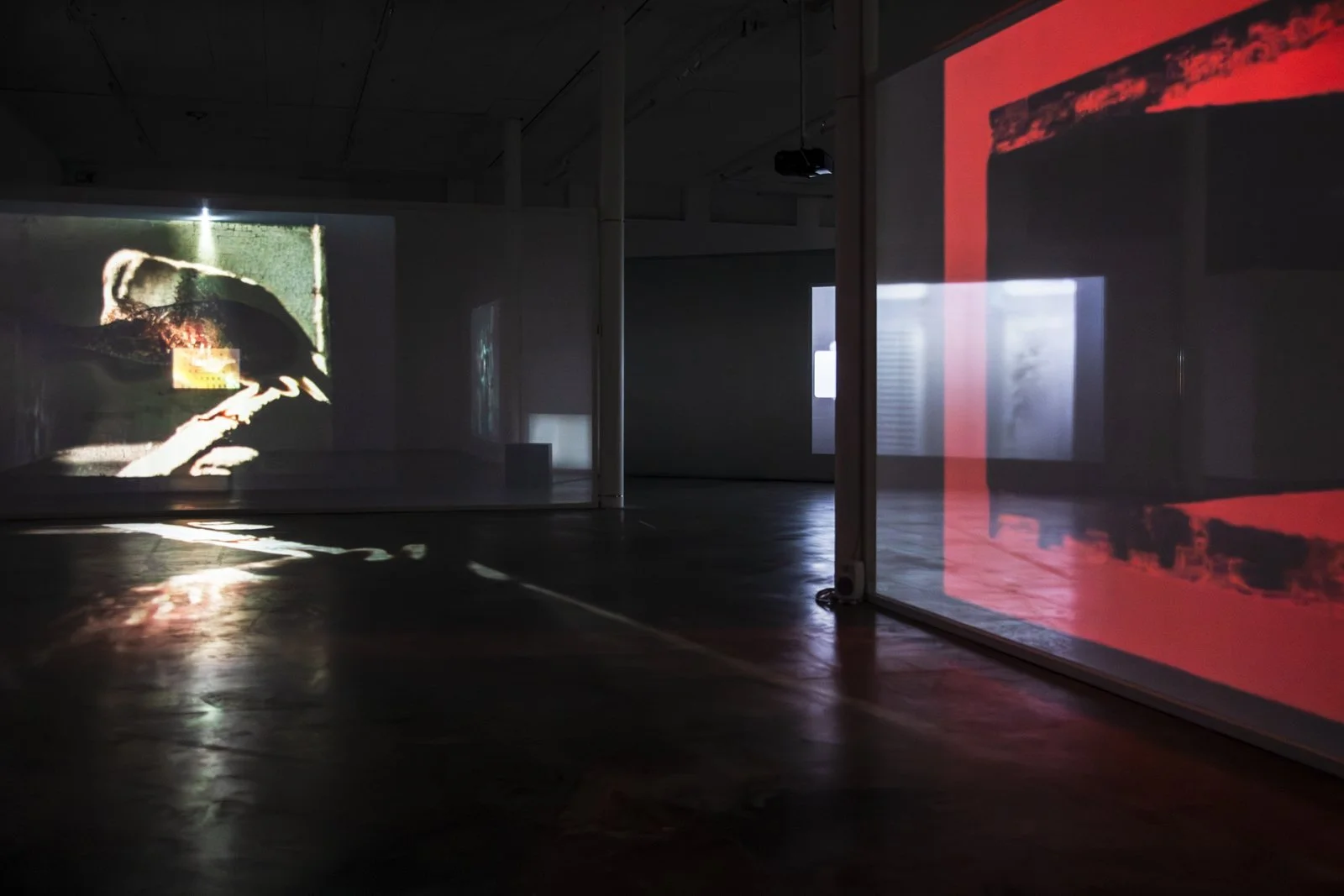
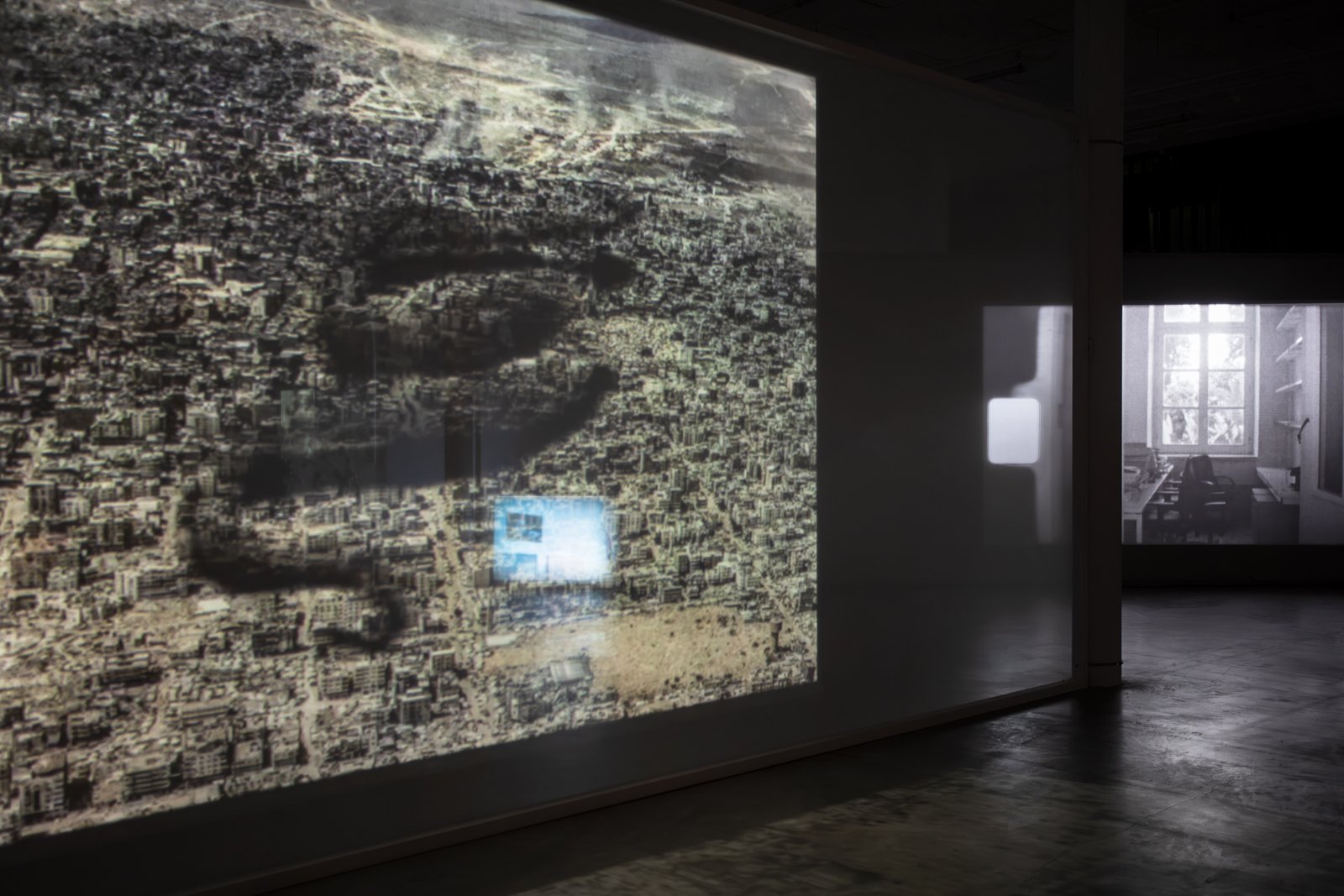
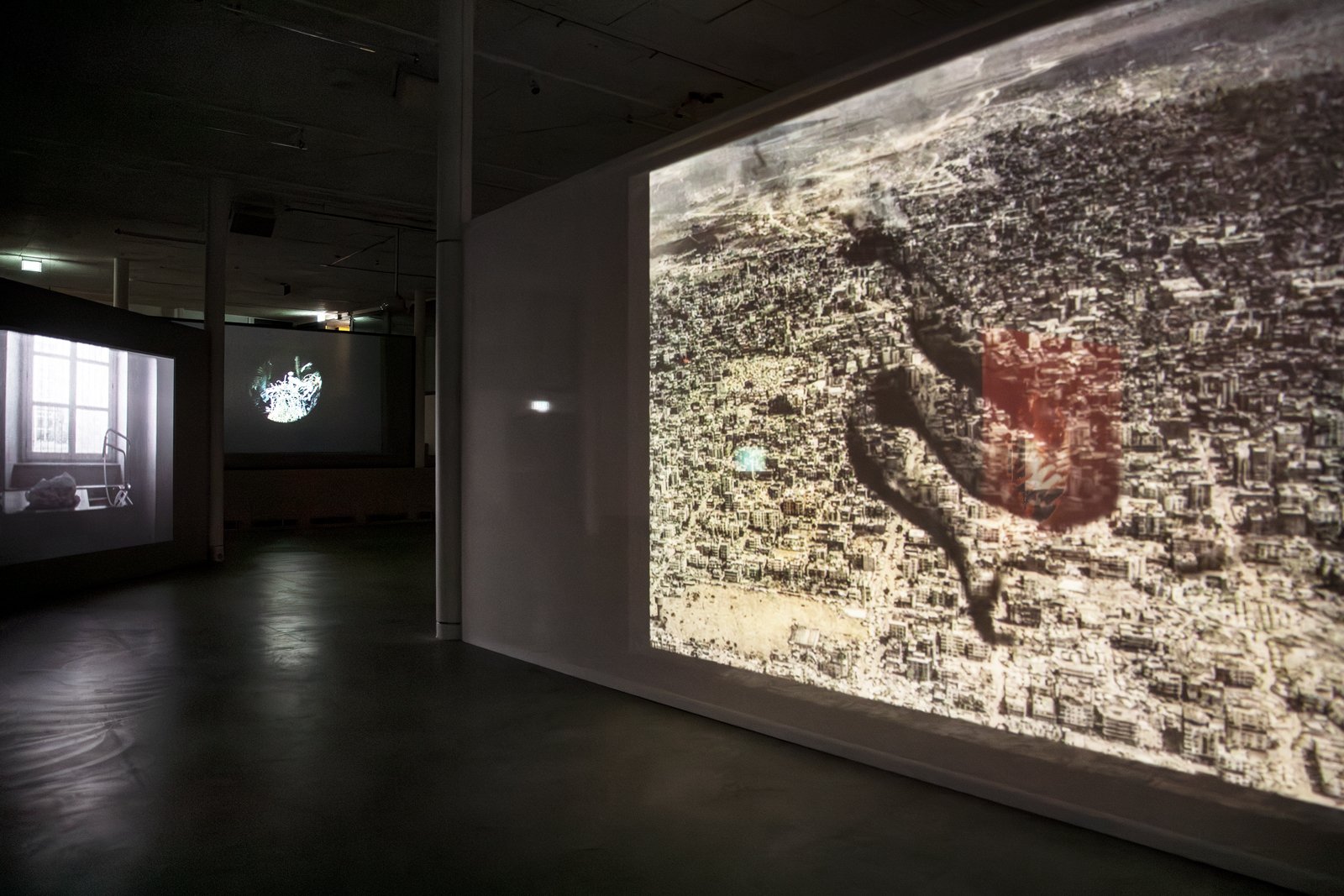
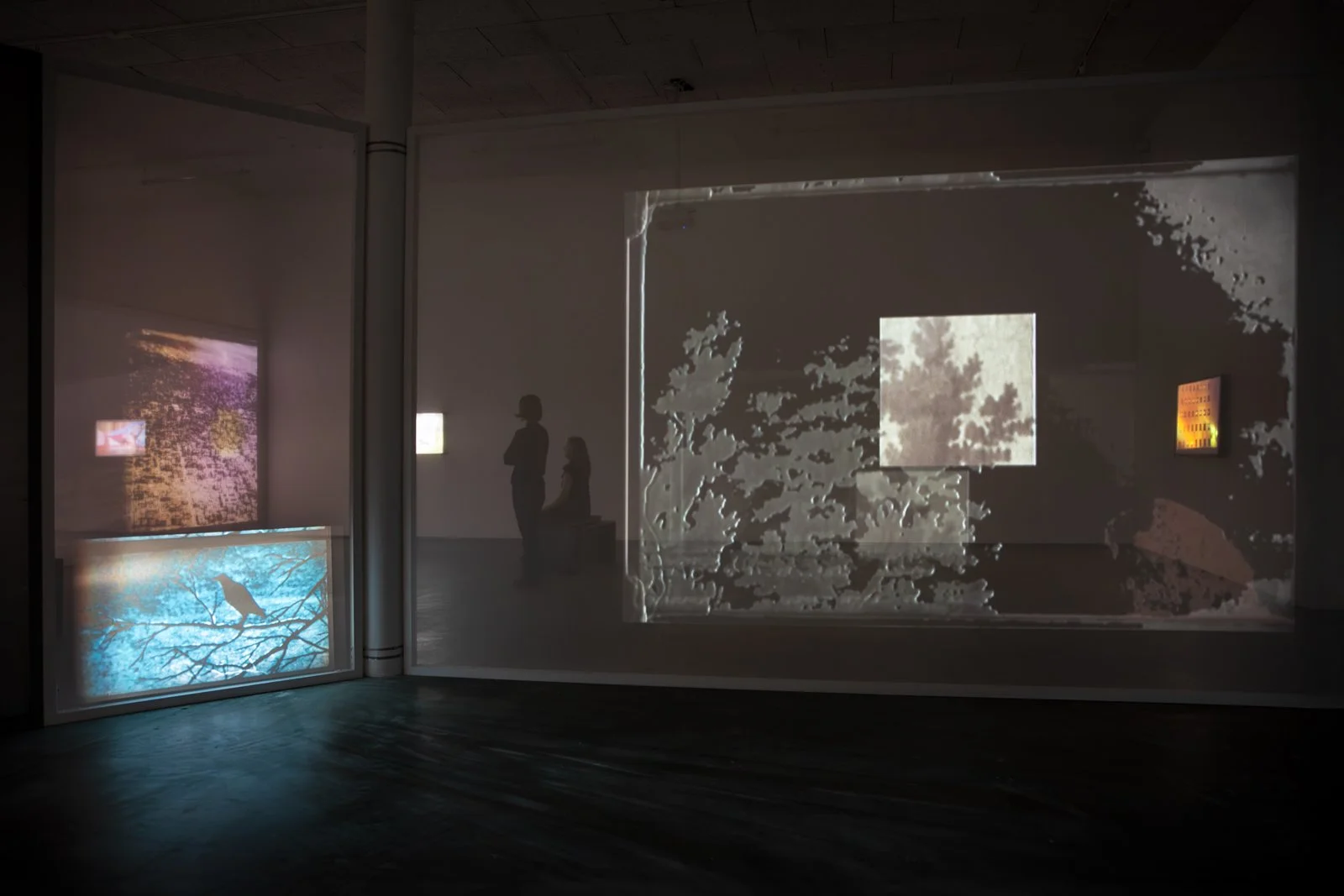
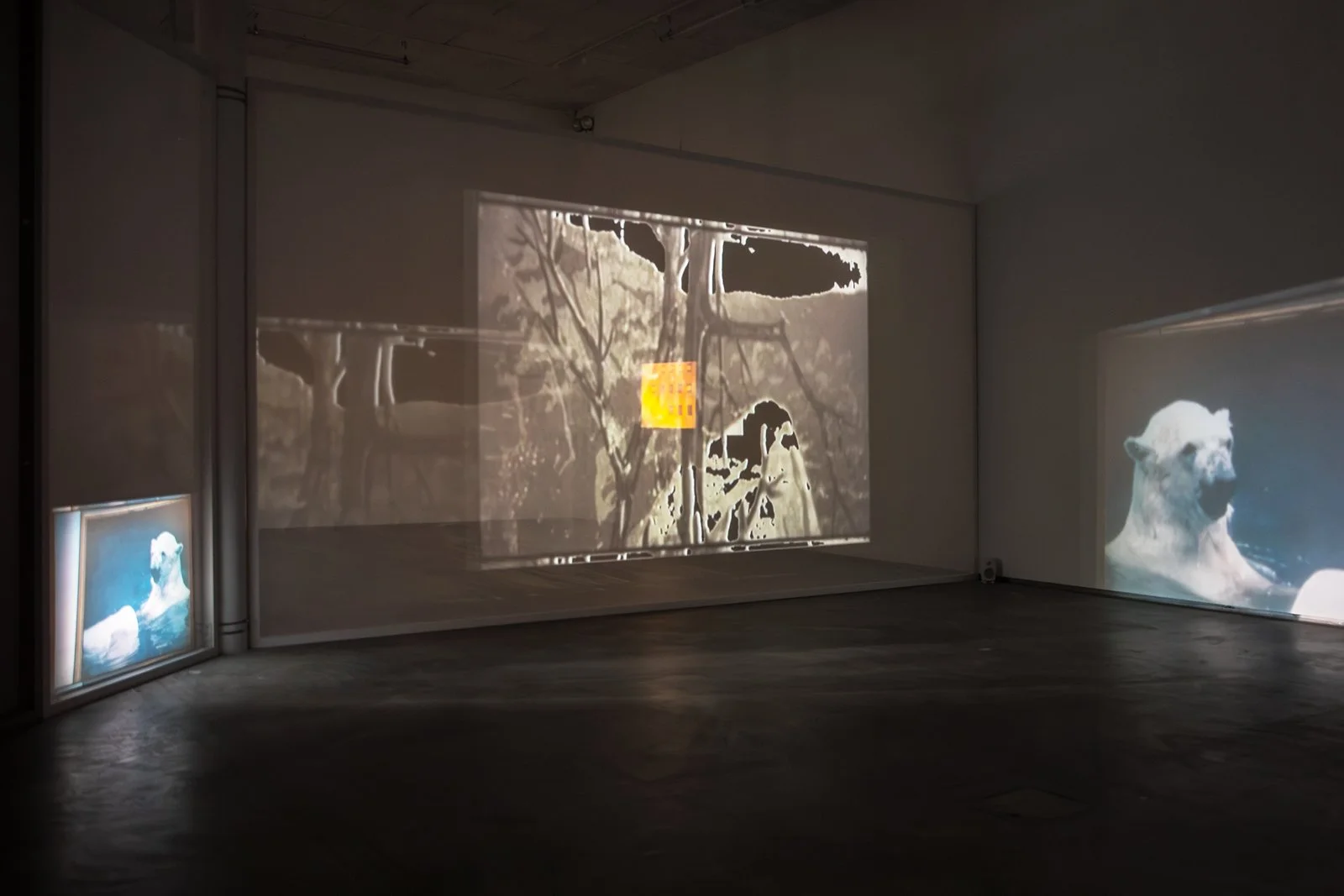
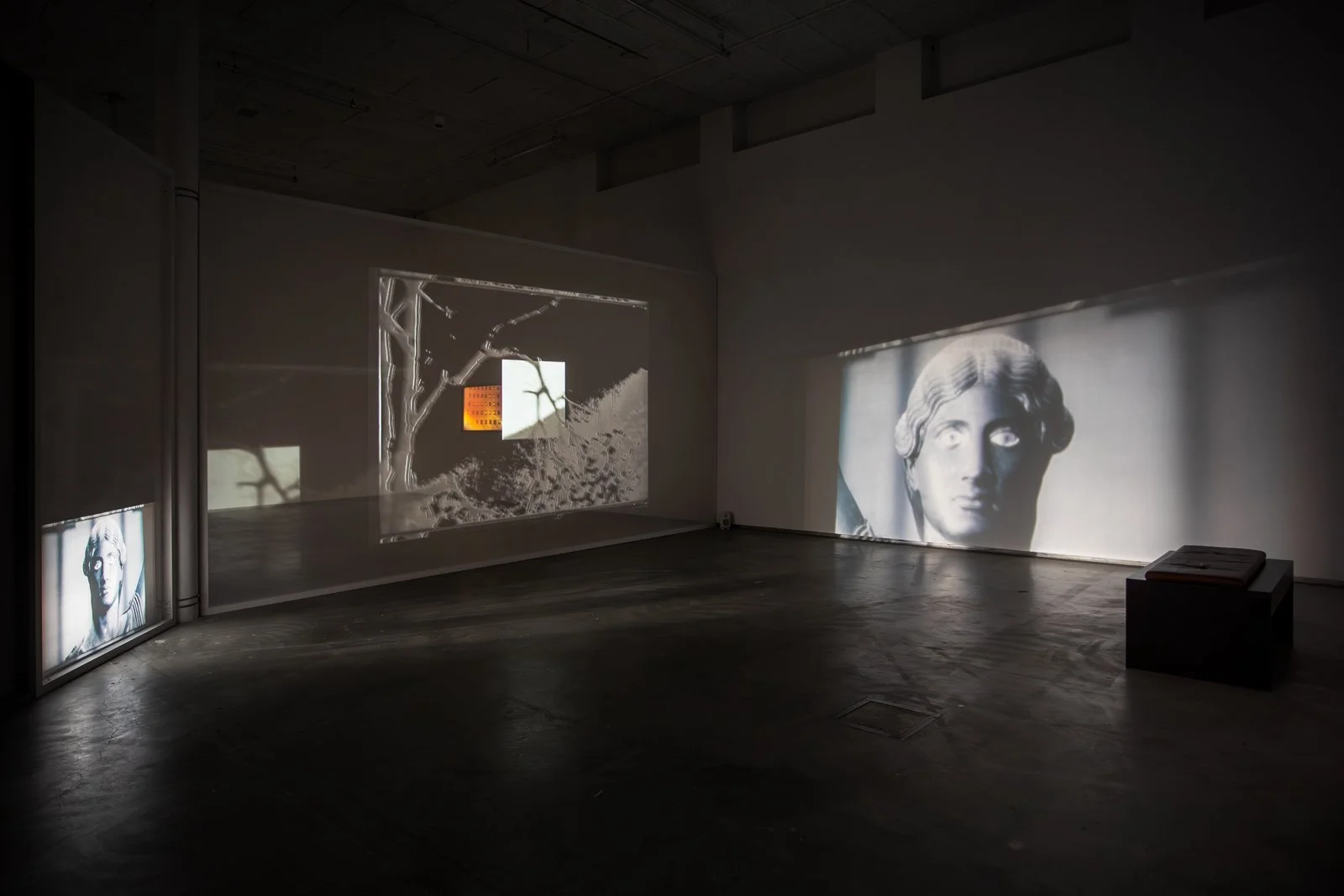
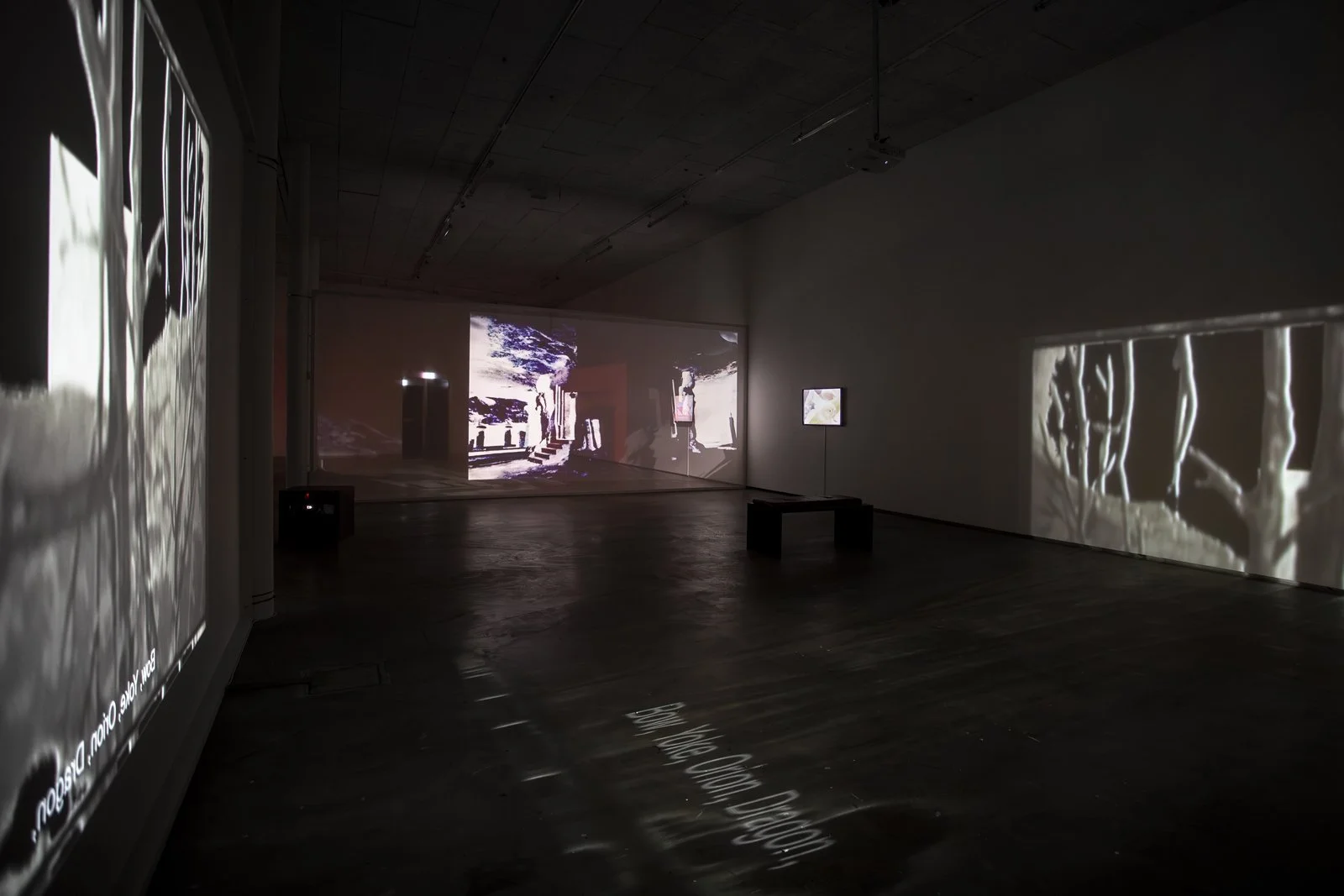
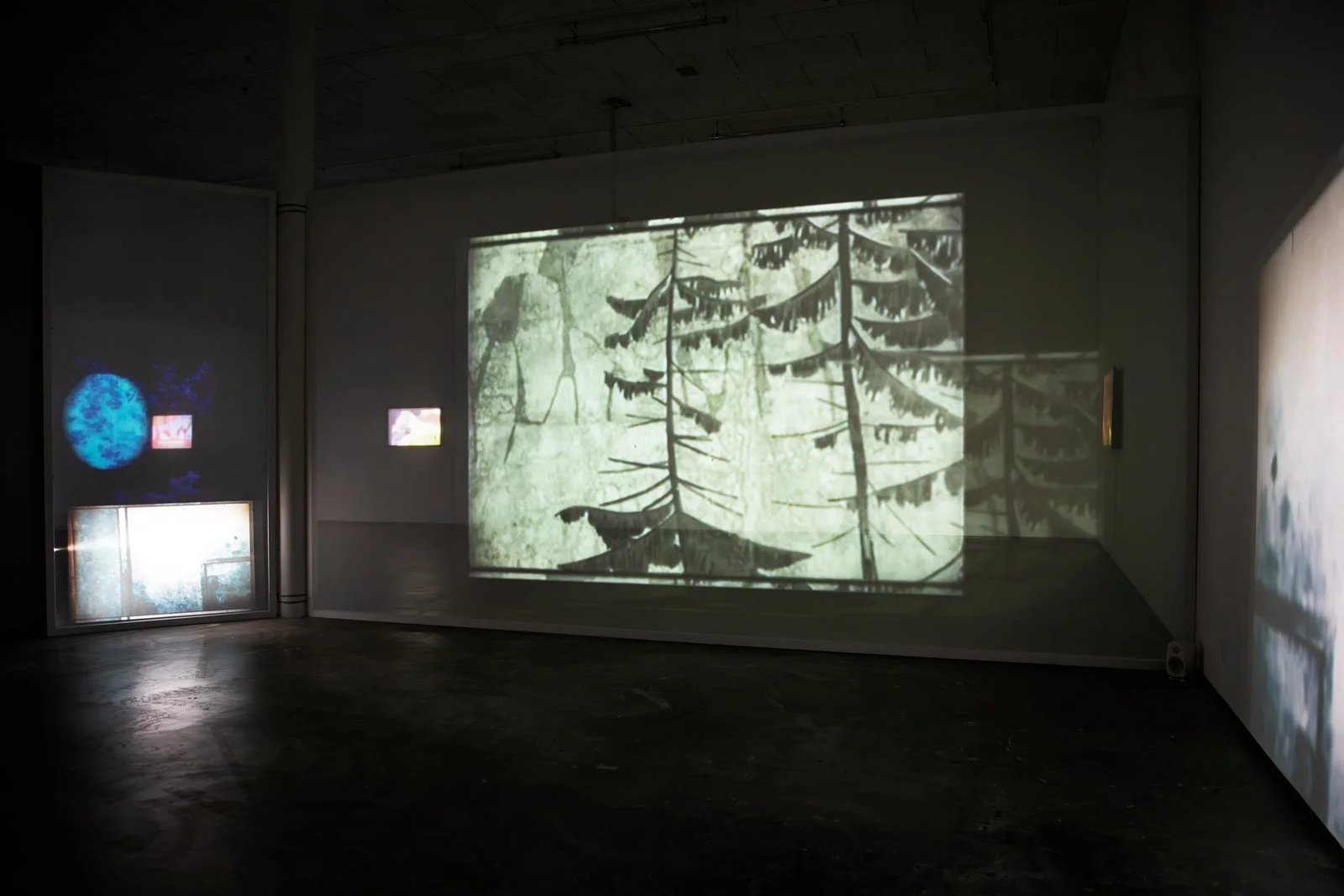
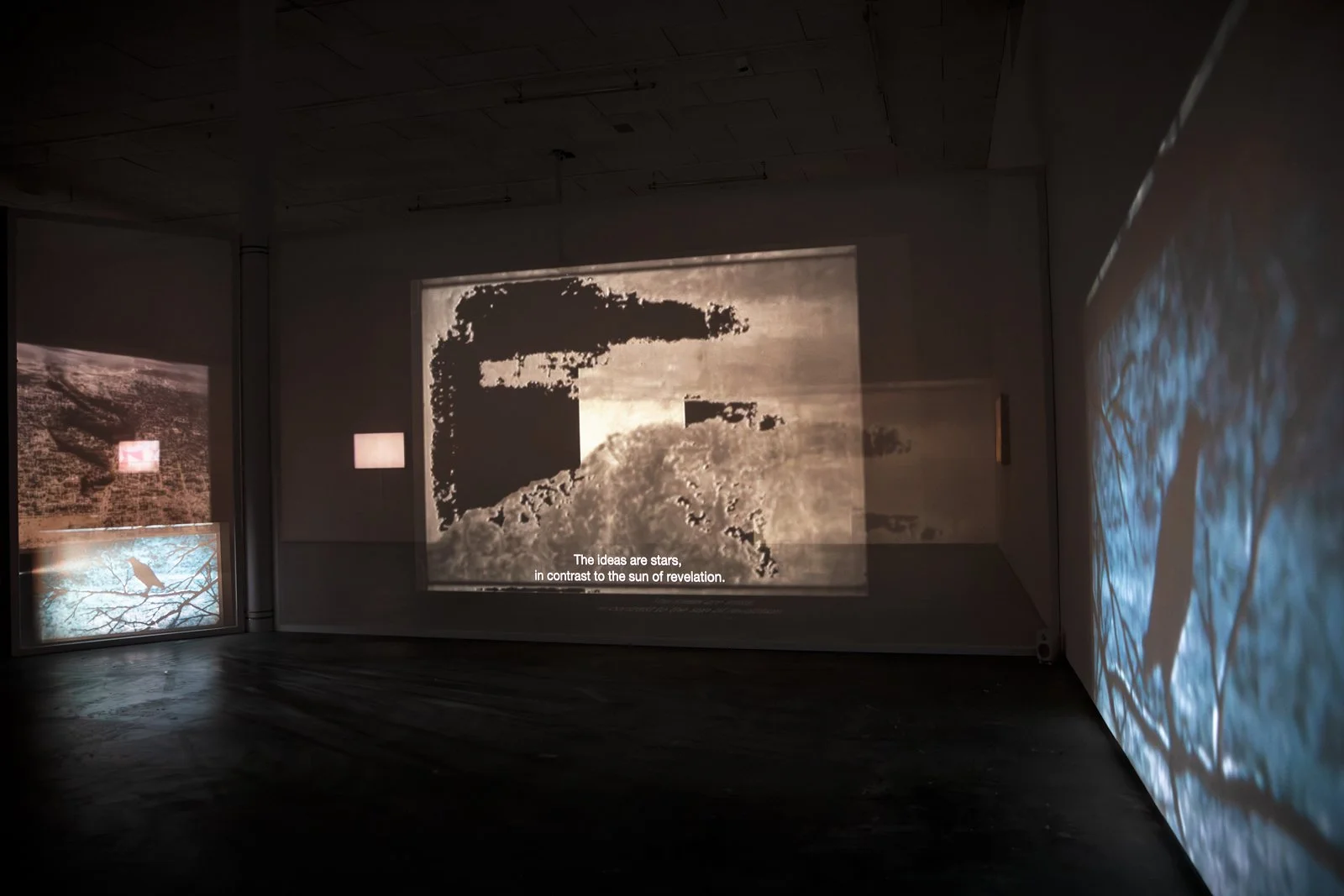
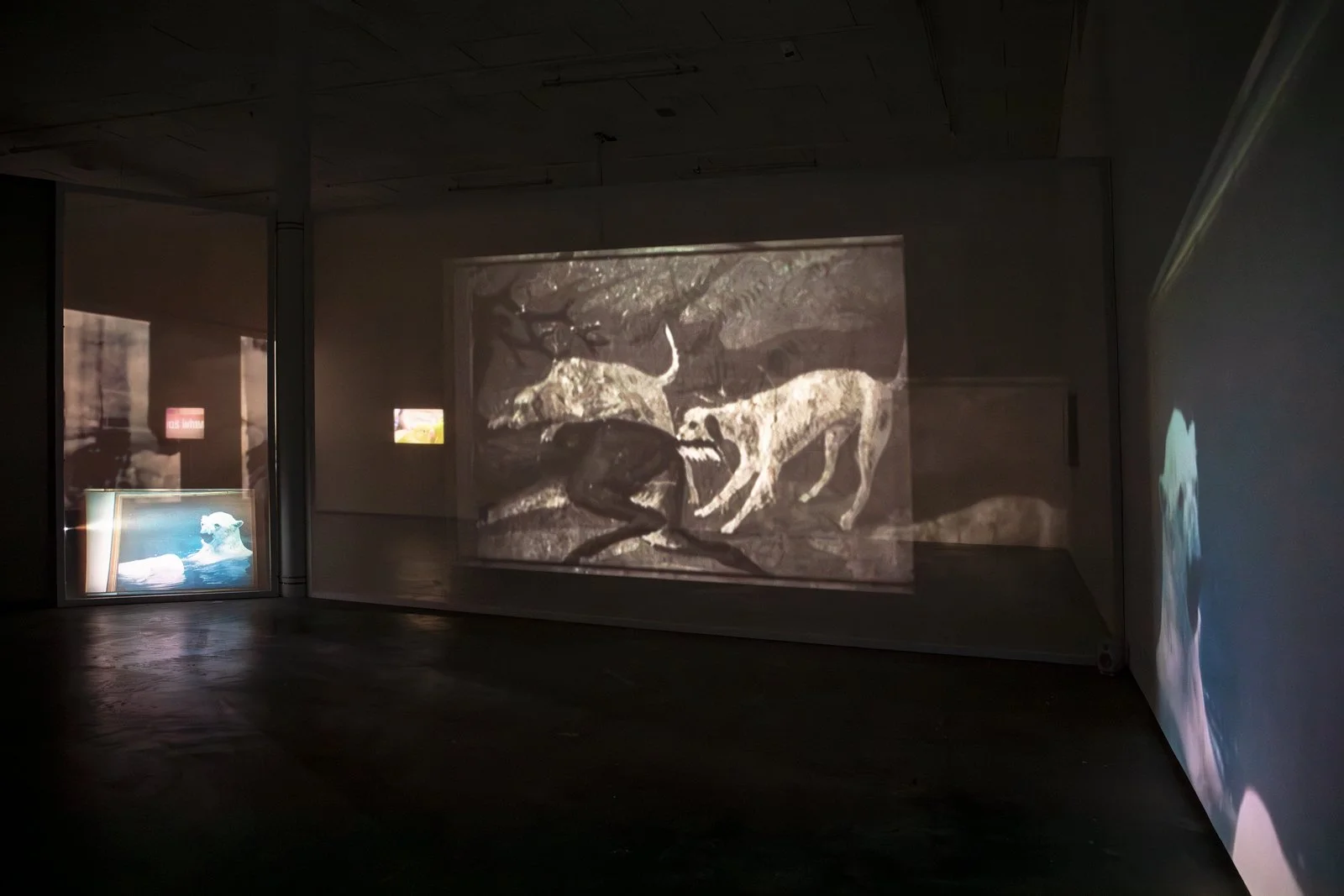
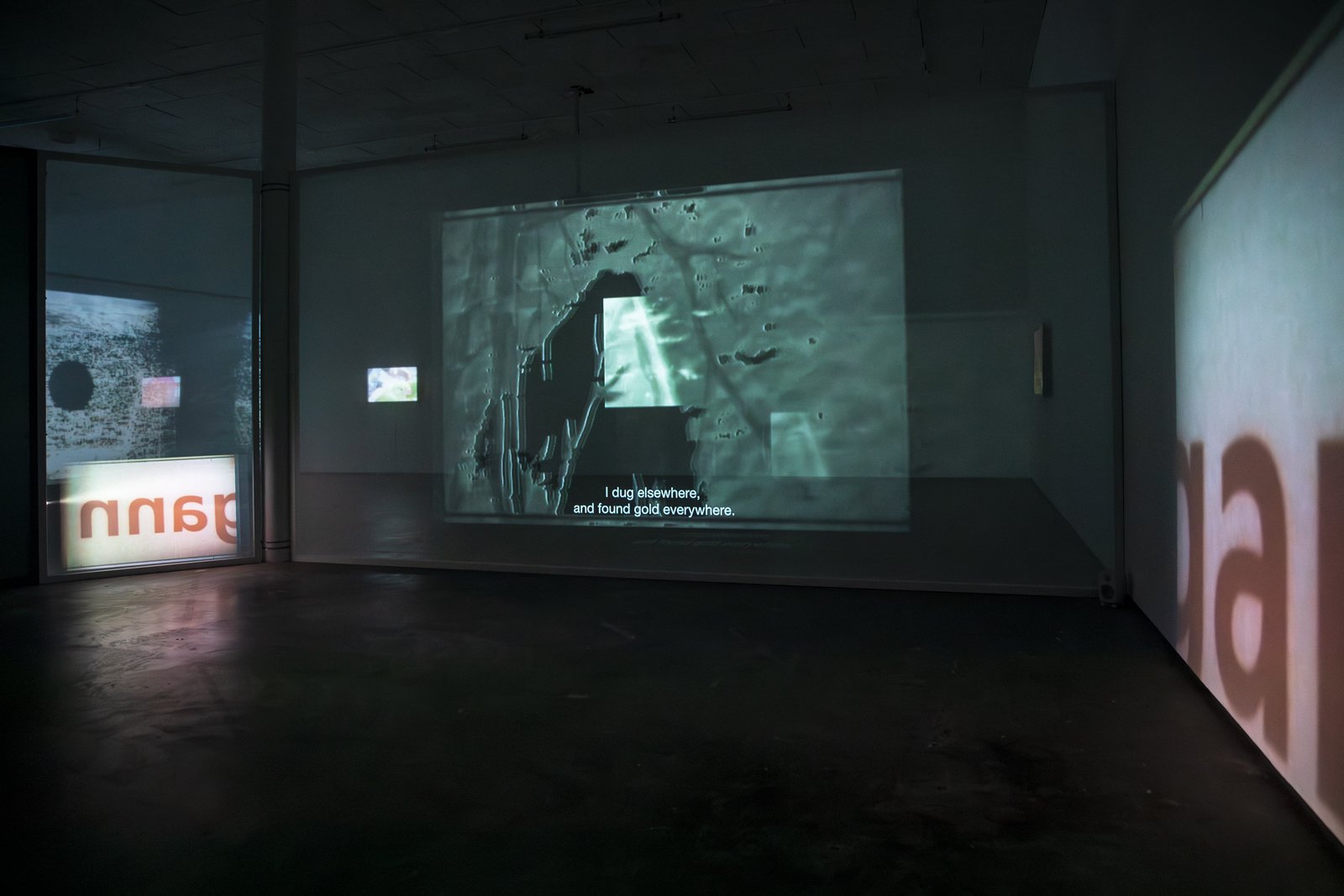
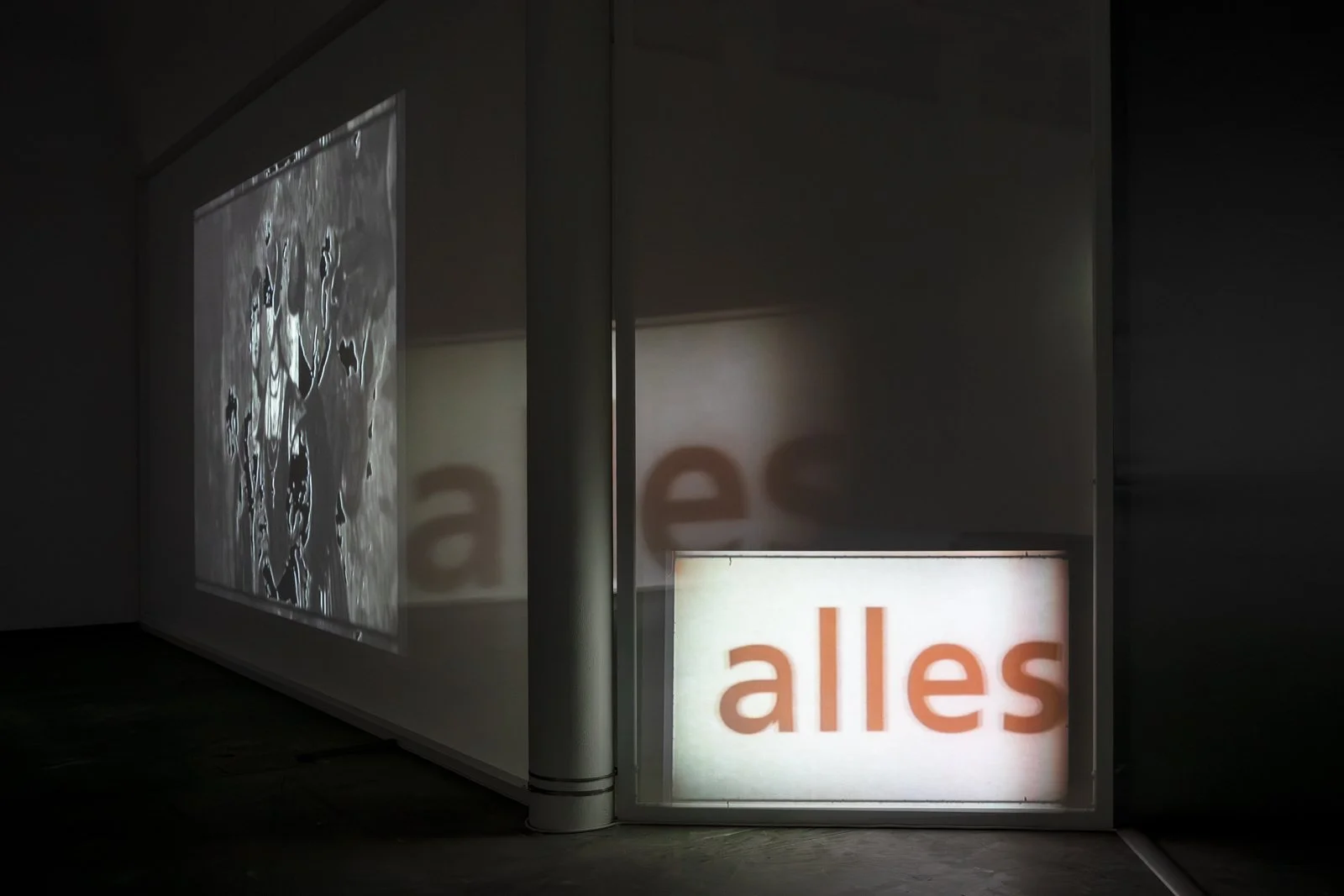
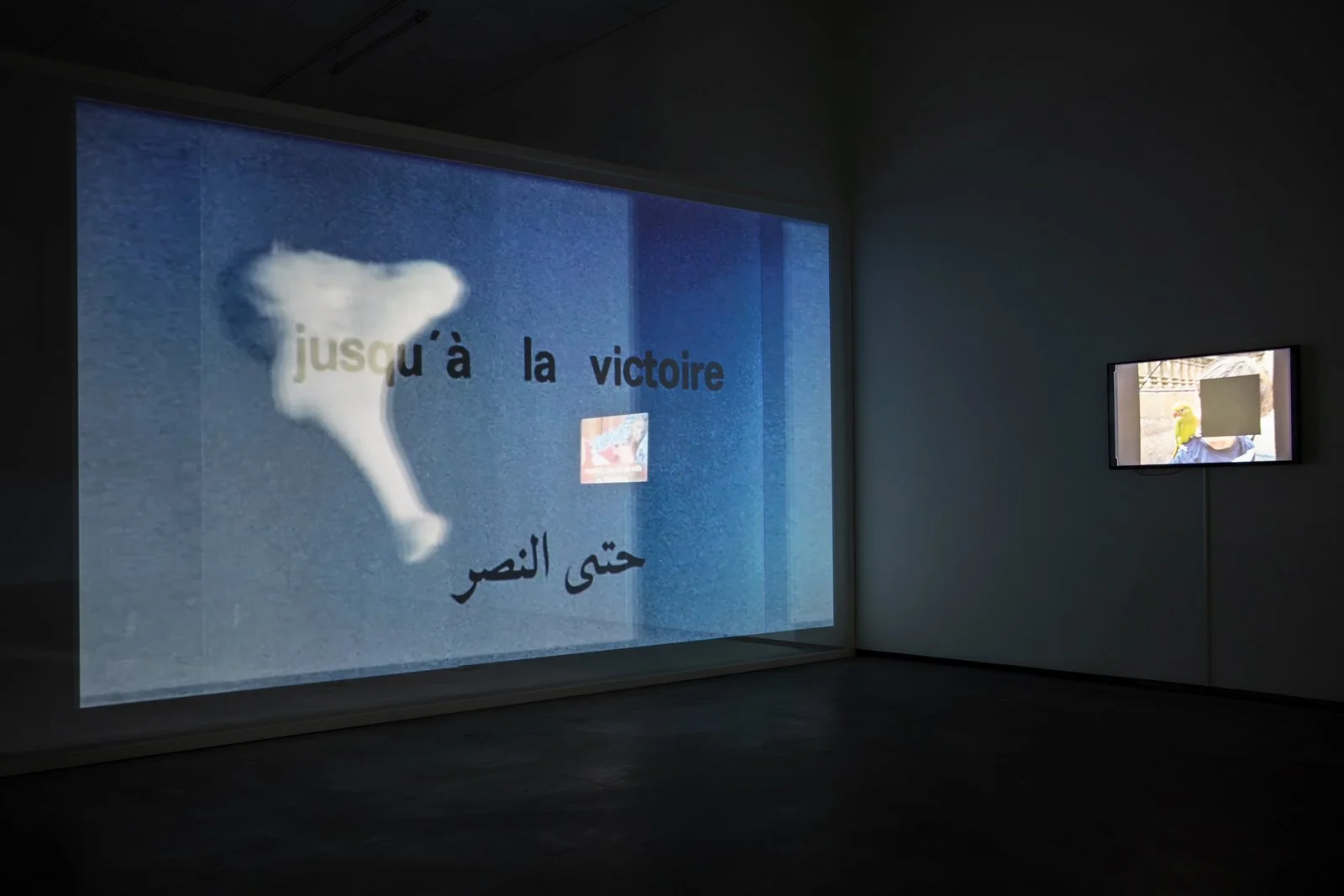
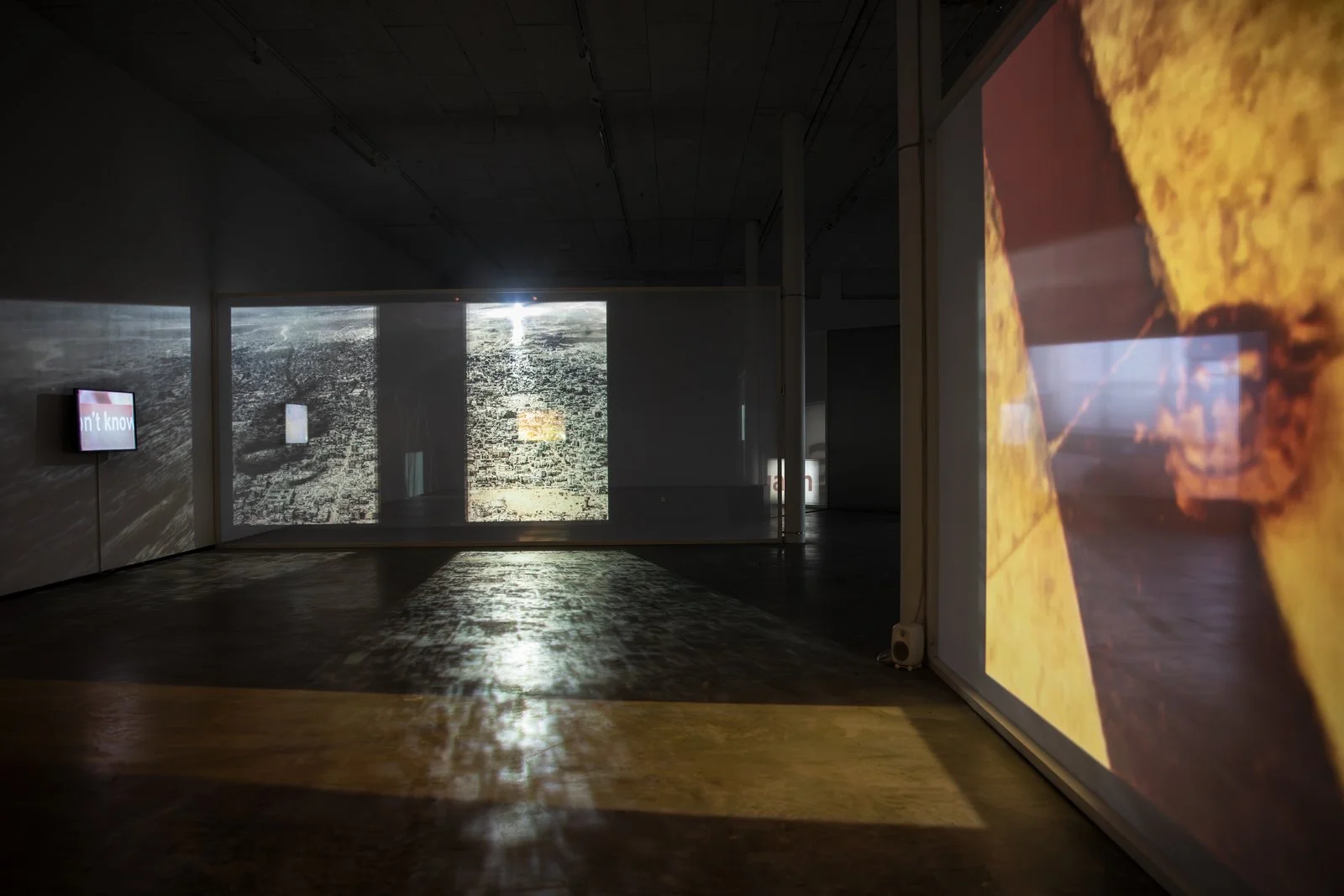
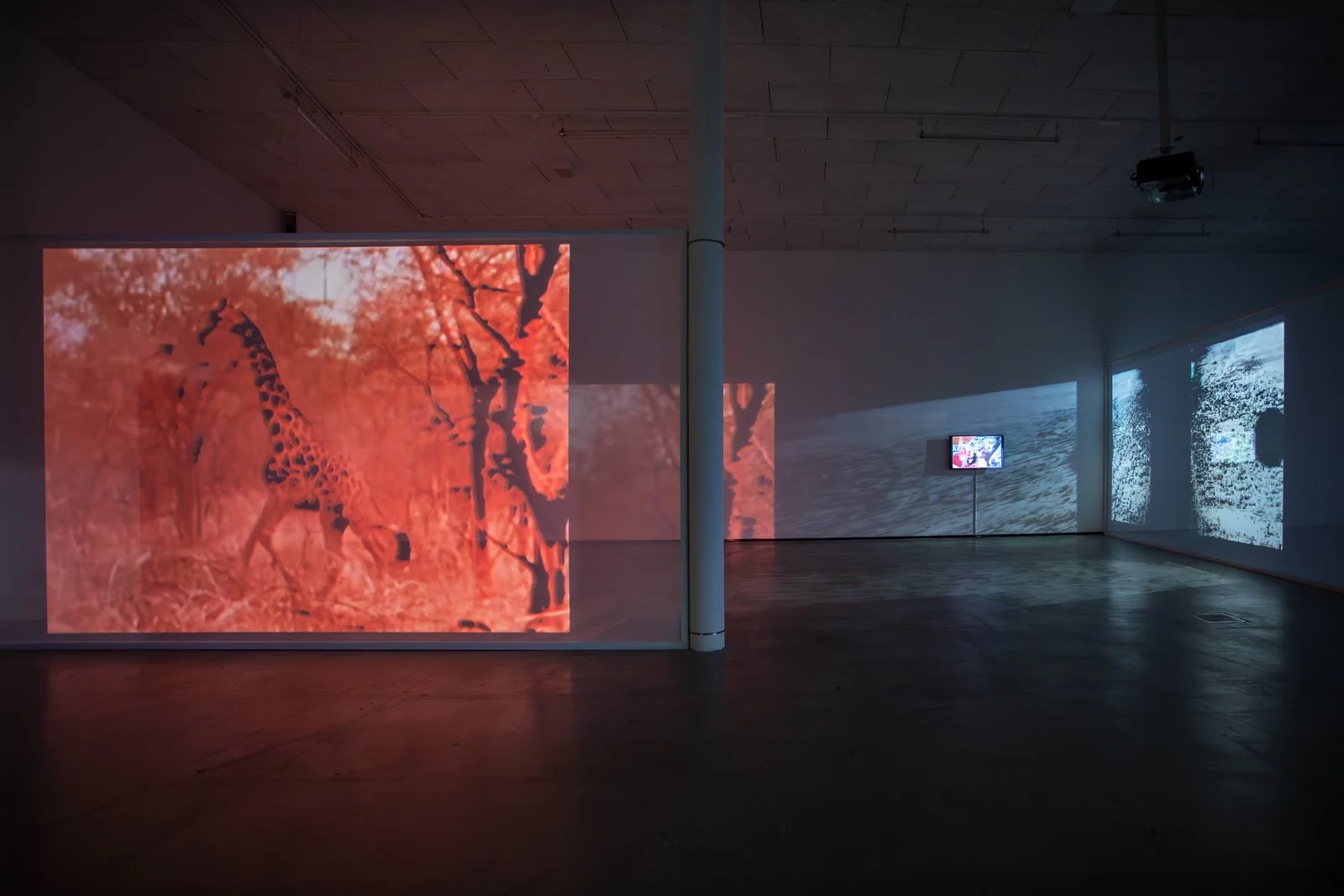
Once down on the gallery floor, we encounter an installation where different film works interact as one whole, consisting of twelve films. Some are projected onto the walls or onto screens with varying degrees of transparency, or are shown on flatscreens. To experience the exhibition, one must walk between the films, which affect each other with their images and sounds. The images mix, bleed into each other and onto the walls and floor of the art gallery. The large installation is in constant change—different layers of space and temporality meet us as if in a floating archaeological excavation. In One Is Equal to One, montage is not just an editing method used in the individual work. It knocks down the walls between the rooms of the different works and allows everything to become one.
Lina Selander mixes her own footage with film fragments and stills from various sources. She processes the images to enhance their materiality and give them body. The French filmmaker Jean-Luc Godard says in his last film Le livre d’image that “The true state of man is to think with his hands”—an observation that one might not initially think of as applying to the fleeting medium of film, but which is essential to Lina Selander’s editing practice, in which the work of the hand and the eye meet. In the production of her new works, she has used older and defective recording and editing machines, lifted images from Instagram feeds using analogue film, and sought out the damaged and incomplete. Her works consciously move below the surface of the supposedly non-material, perfect, and quickly passing flow of images that surrounds us.
In the contemporary media flow, whose images we see whilst not really seeing them at all, and which we increasingly distrust, the image loses its role as a witness, as what we do not want to see is easily dismissed as manipulation. But there are images that we need to see.
In her work, Lina Selander compels the image to halt, insisting on its presence. From the broken machine emerges an image where the gaze no longer glides along as if over a smooth, polished surface, but instead opens a space for the human and the bodily and thus lends agency to the broken. Through the destruction and abstraction of the image, the film material is set free. In the scratches and gaps, the gaze and the thought can take hold.
Helena Holmberg
Photo: Sara Appelgren
Download:
Go to publication.