Binding the Dream
With Oscar Mangione (image and editing), Carolina Jinde (sound) and Marcus Harrling (16 mm)
Installation in three parts
Courtesy Lina Selander
Part I
16 mm transferred to HD, 20 min, colour, silent
Part II
DV-tape transferred to HD, 6 min, colour, sound
Part III
DV-tape and digital file transferred to HD, 12 min, colour, sound
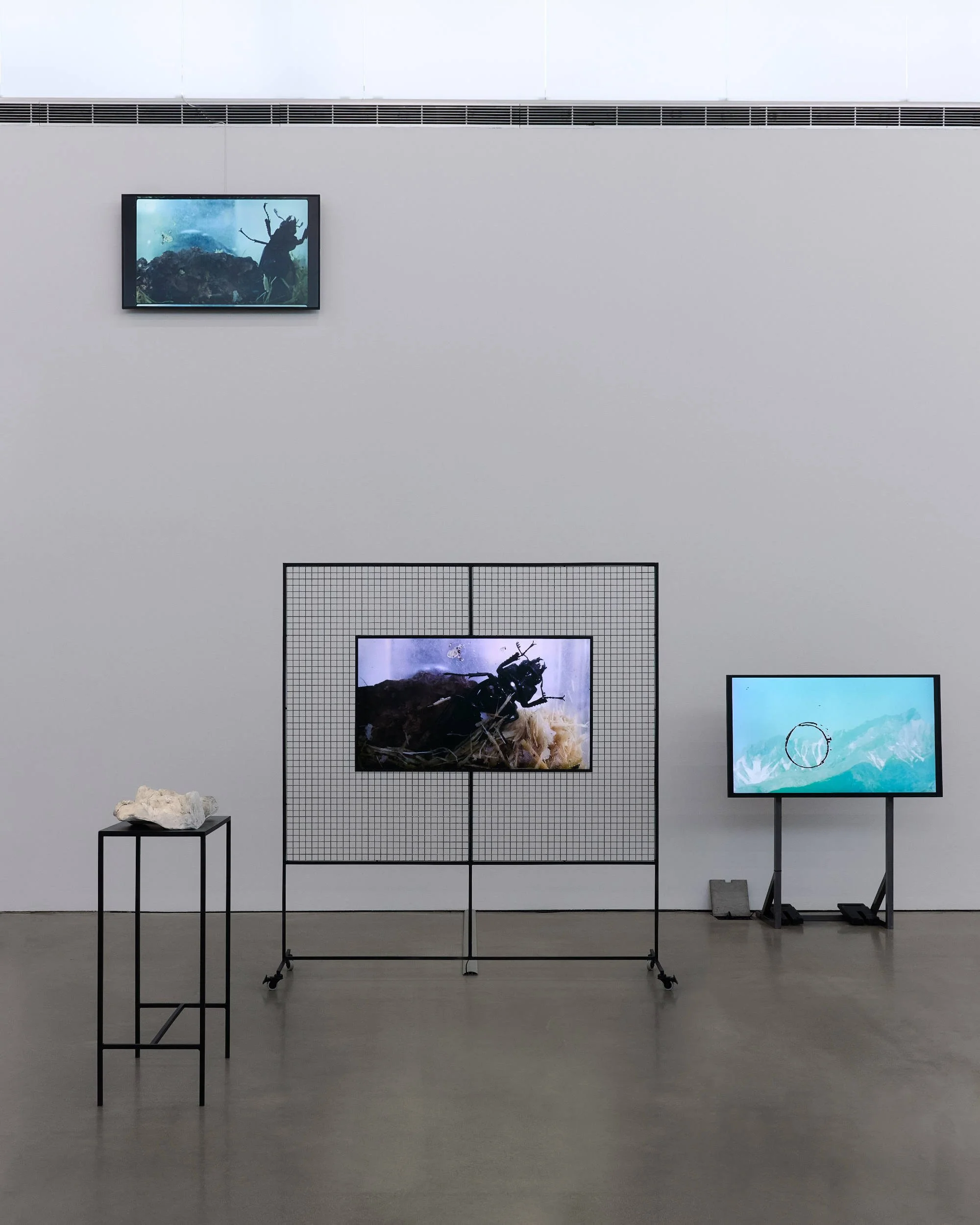
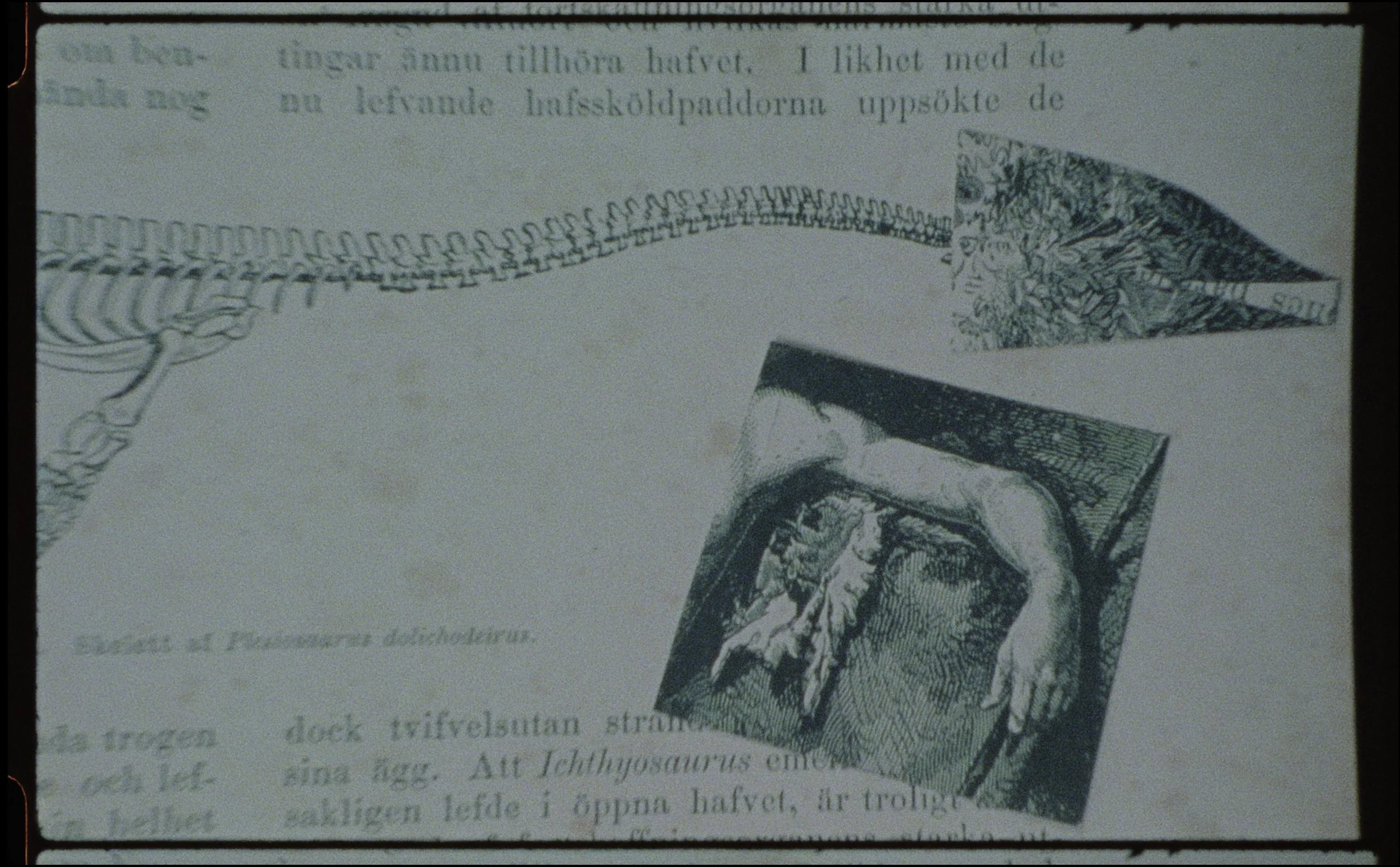
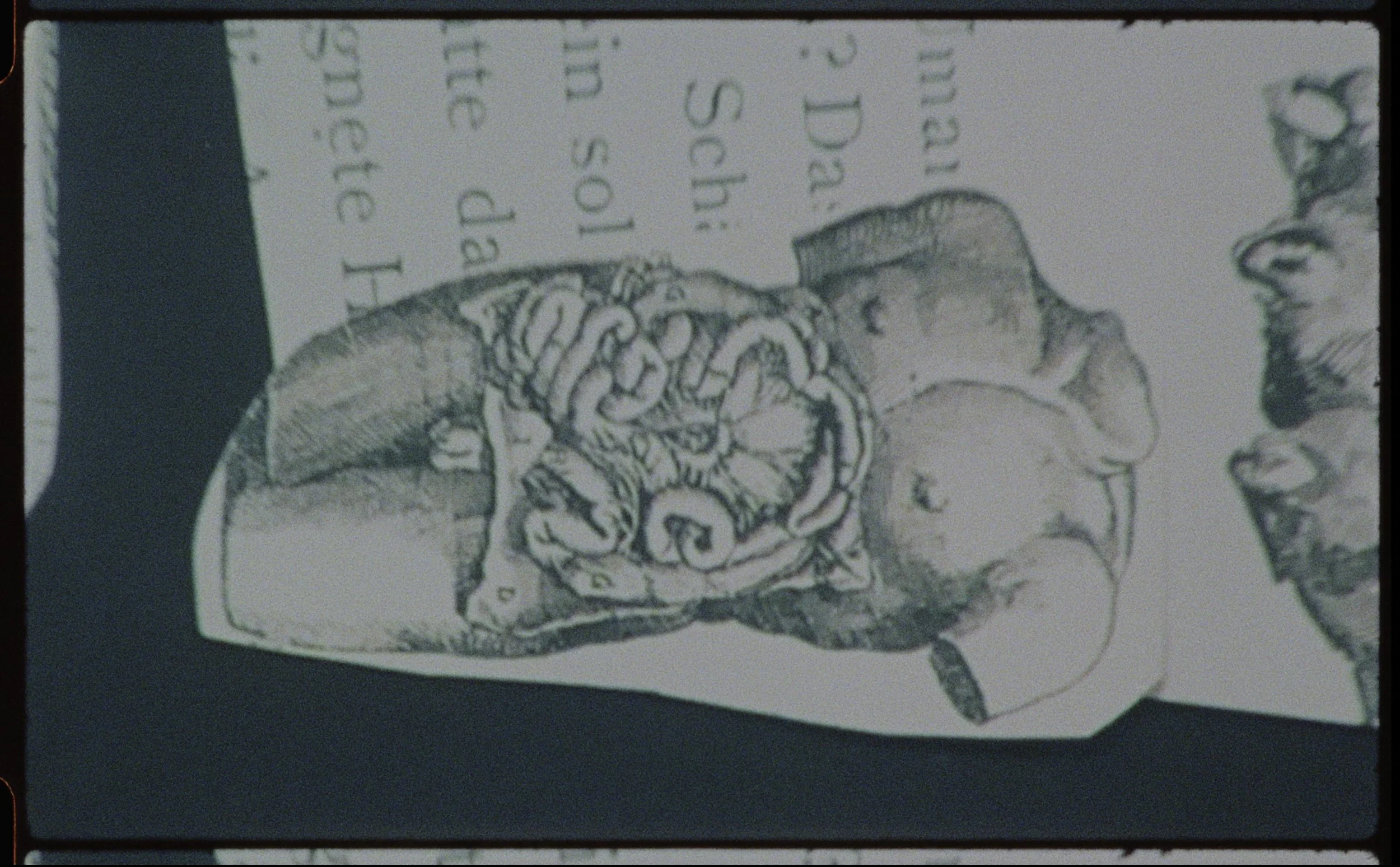
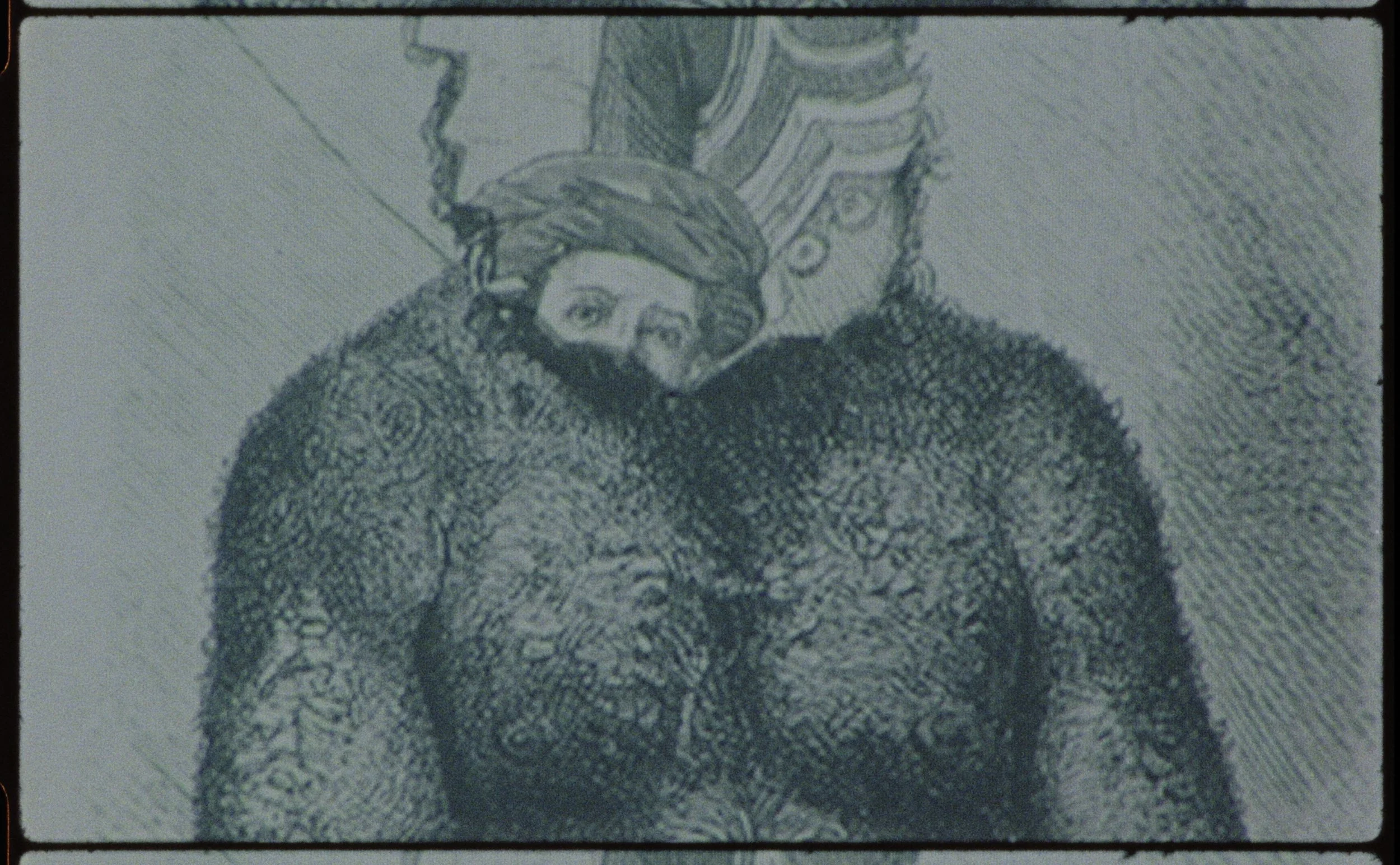
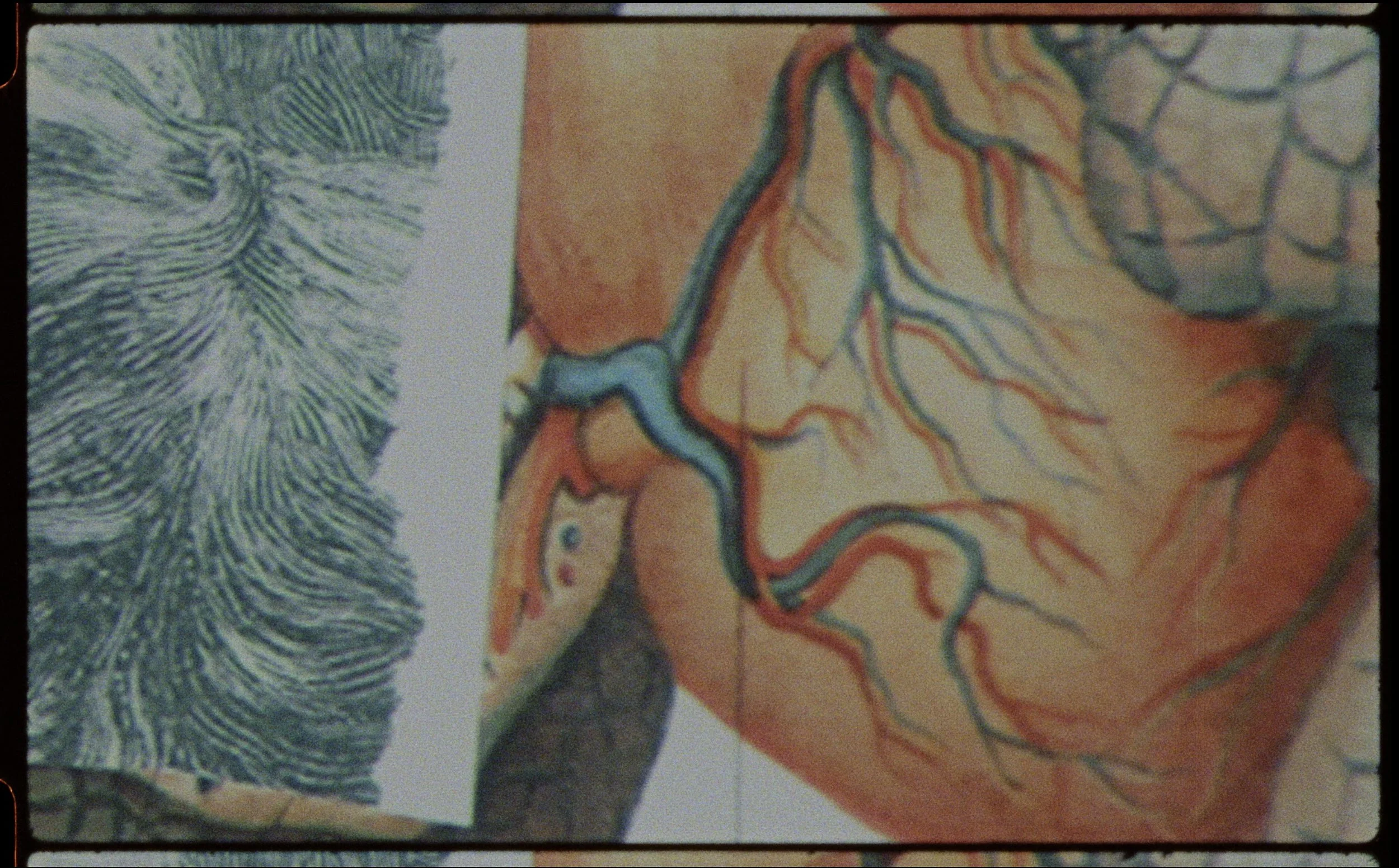
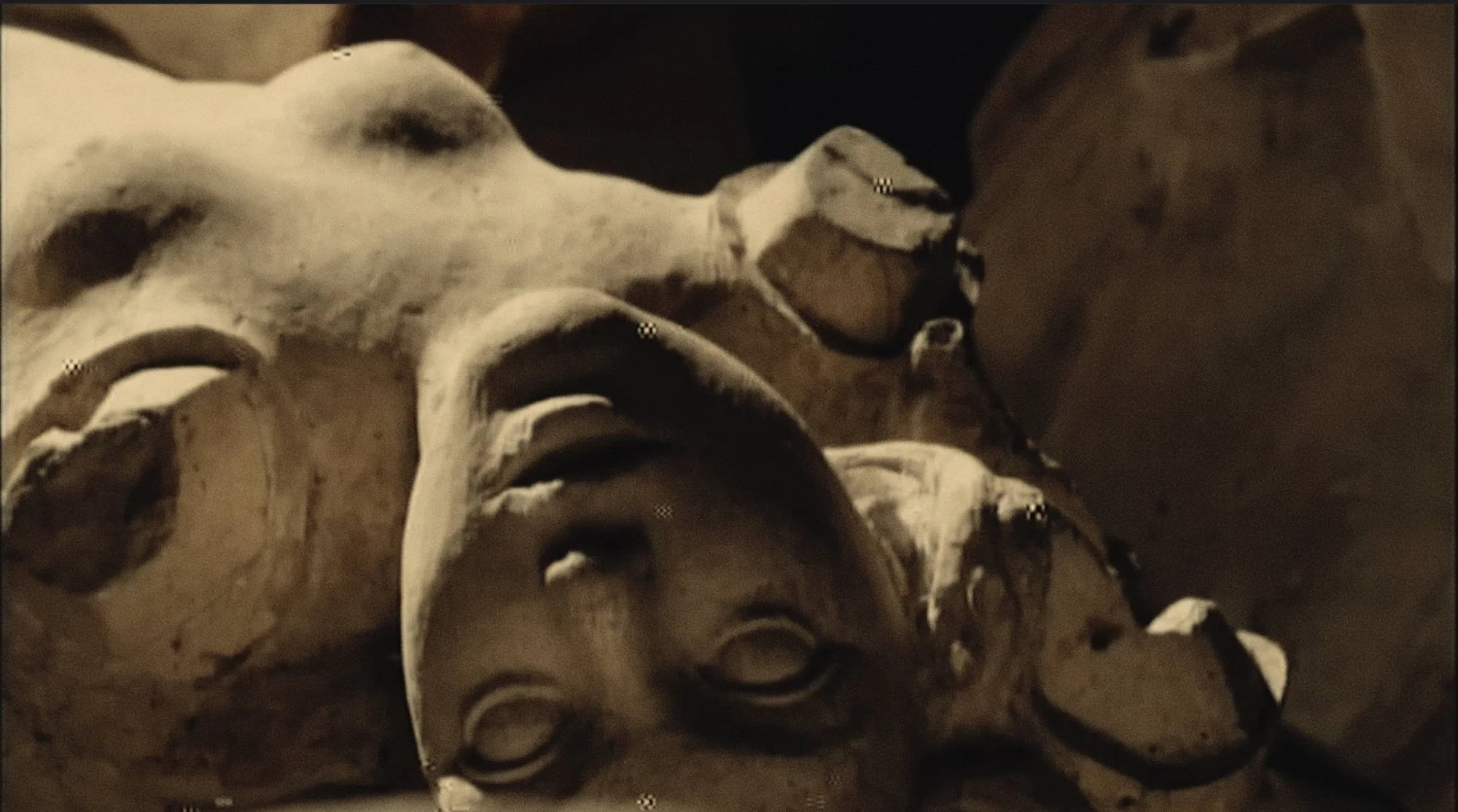
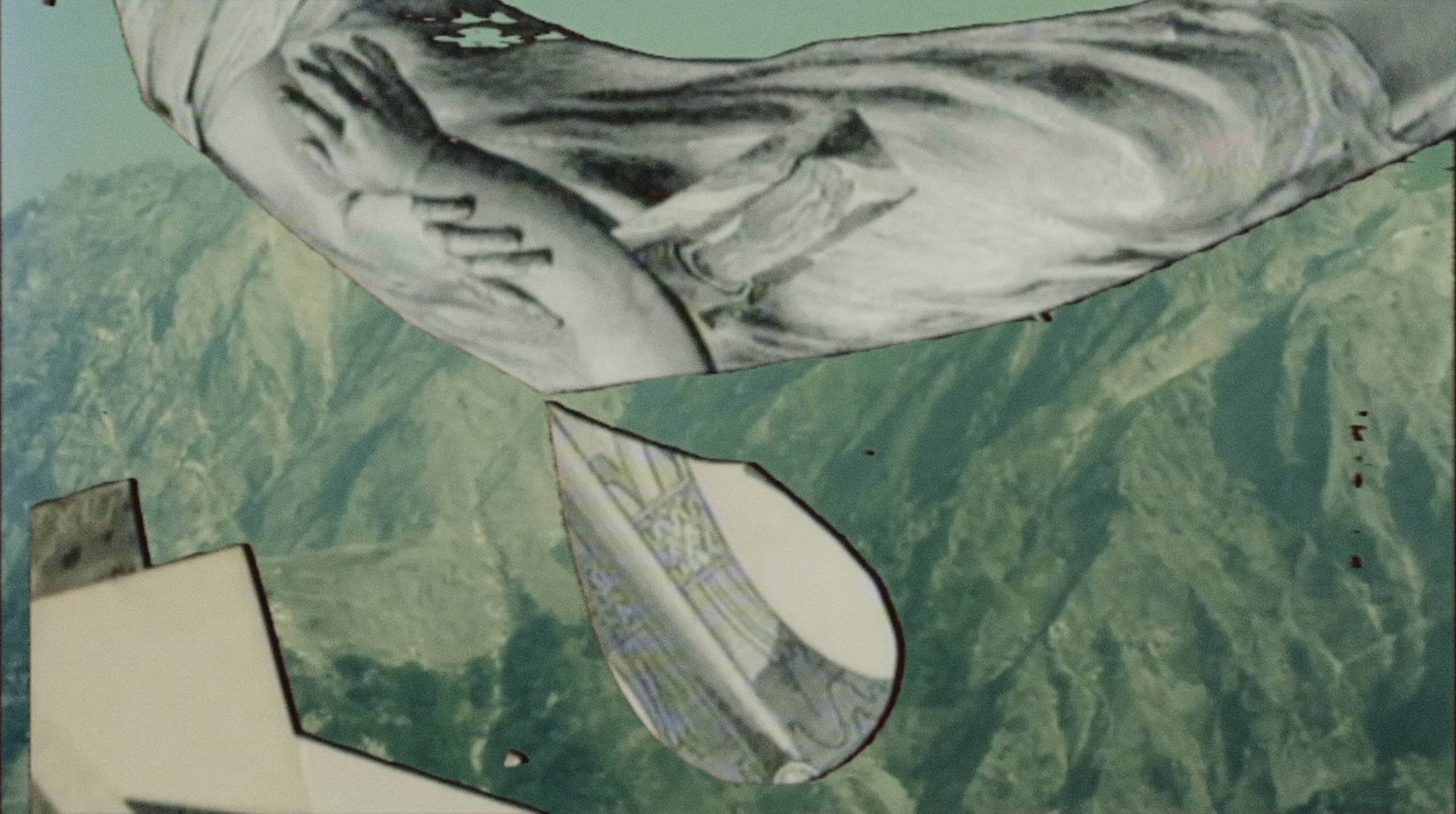
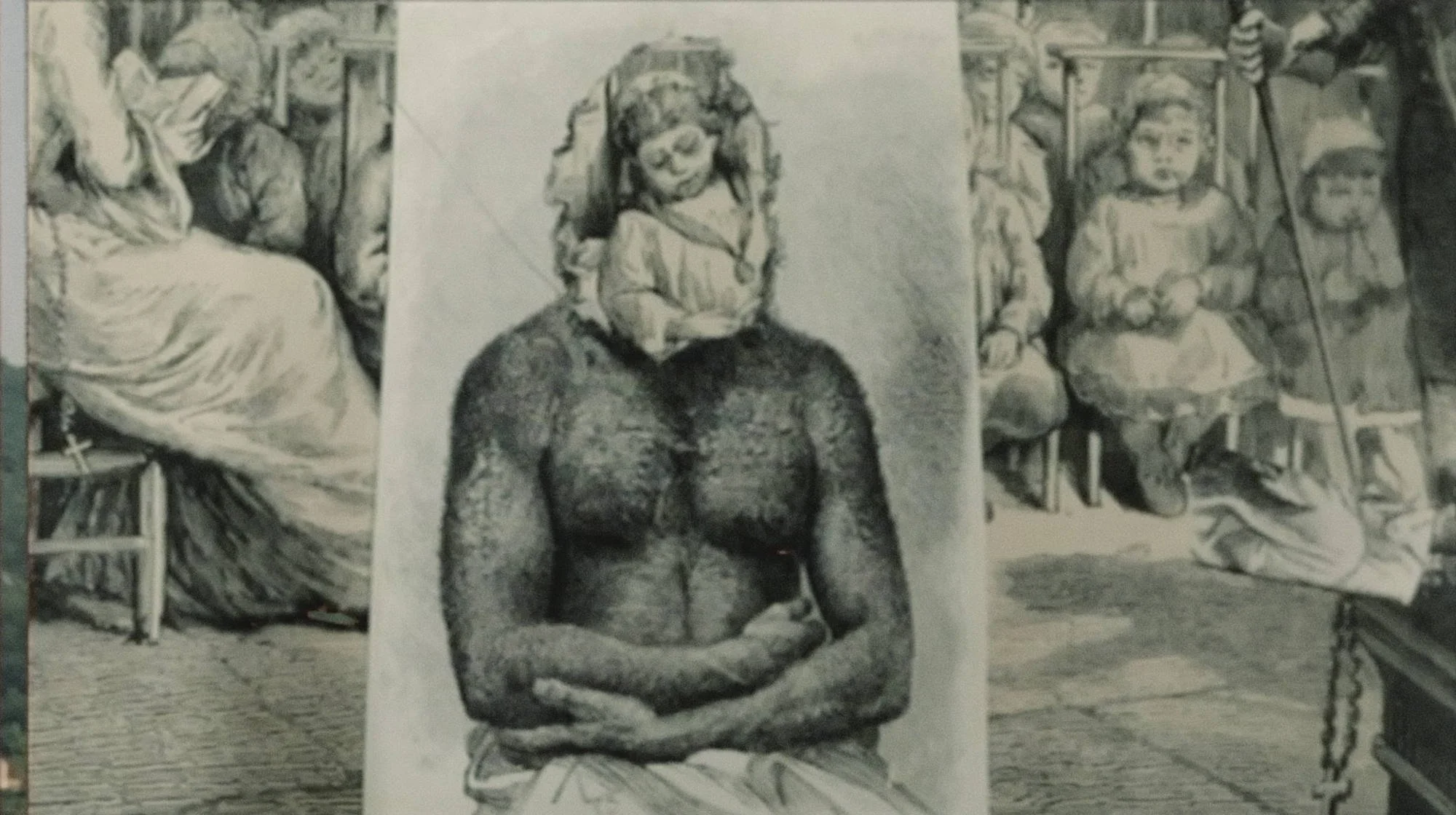
The three-channel video installation features the following elements: images of collage fragments and leftovers from the archive of Gunilla Palmstierna-Weiss and Peter Weiss. Shots of sculptural models, fragments, and scraps from the basement of the studio of Swedish sculptor Carl Eldh. Landscape from Fortini/Cani (Straub-Huillet, 1976). Short clip with young boys from Palestina, Otro Vietnam (Jorge Giannoni, Jorge Denti, 1972). Short clip with text against blue background from Ici et ailleurs (Jean-Luc Godard, Jean-Pierre Gorin, Anne-Marie Miéville, 1976). Film clip shot by the artist in northeast Skåne. Film clip shot by the artist in Bredäng, winter. Film clip shot by the artist on Medborgarplatsen, 16mm. Painting of Khepri, scarab-faced god, born out of nothingness, from the entrance to the tomb of Nefertari, Luxor, Egypt (from Wikipedia). Tent in hard wind (sandstorm in Gaza?) (from Youtube or similar). Improvised guerilla in Bolivia (?) (from Youtube or similar). Fragments from fighting in Gaza (from Youtube or similar). Bulldozers in the destruction in Gaza, filmed from the driver’s seat (from Youtube or similar).
A work of art that aims to convey a political message and relinquishes its claims to artistic form calls its own validity into question. This is what Lina Selander and Oscar Mangione assert, paraphrasing Peter Weiss’s Notes on the Documentary Theatre. Selander’s multi-channel film installation Binding the Dream (2026) returns to one of the fundamental problems of critical art: How can a work of art be politically useful? How can it become part of resistance—or even expand the struggle? Their answer—and this has been evident throughout Selander’s artistic practice over the years, which in different ways has defended and experimented with the tradition of intellectual montage—is that it can only do so by taking into account the conditions specific to the artwork and its systems of mediation. It is through these conditions, rather than in spite of them, that resistance can be sustained.
Binding the Dream combines material from different sources, including photographs of collage fragments from the archives of Peter Weiss and Gunilla Palmstierna-Weiss. It also includes footage of sculptural models, sketches, and fragments from the basement of the studio of the Swedish sculptor Carl Eldh, known, among other works, for his sculpture of the medieval Swedish rebel leader Engelbrekt, whose wandering and fateful rebellion is an important theme in Weiss’s The Aesthetics of Resistance.
Selander and Mangione work, as they explain, “with a concrete and historical concept of resistance: the struggle against fascism, colonialism, and exploitation. People have sacrificed their lives in this struggle. This reality places a demand on the work of art.” In other words, the artwork must take the side of the defeated; it must preserve the substance of their tradition, but it must do so by refunctioning its own form.